Palestine Heritage Journeys  translates research on Islamic-era Palestine and the medieval history of the region for all

رسالتنا

Our mission

Palestine Heritage Journeys (PHJ) translates research on Islamic-era Palestine into wider public knowledge and understanding, to address ignorance about the medieval history of the region. We stem from a profound sense of urgency, responding to the massive ongoing destruction of the Palestinian historical landscape.

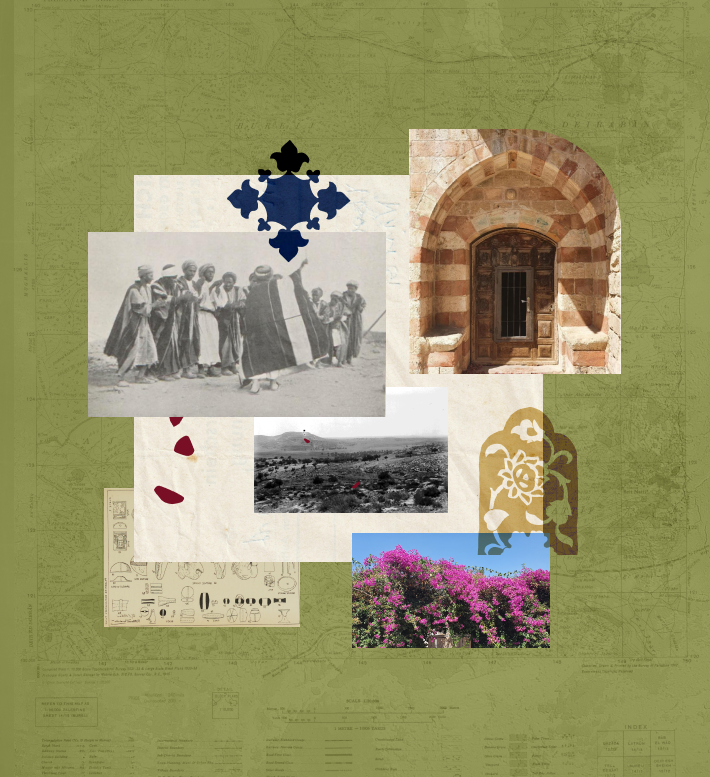
PHJ combines history and archaeology, using material remains to tell the history of the ethnically and religiously diverse peoples who lived in Palestine in the last 2000 years.


‍We aim to:


  1. ‍Bring the fruits of archaeological and historical research into medieval Islamic Palestine to wider attention.
  2. Create a unified historical resource to serve both local and global audiences.
  3. Advocate for the preservation and protection of medieval Islamic sites from physical destruction and erasure of historical meaning.


The name “Palestine” has been in use for the past 2000 years. The Romans created the province of Palestina early in the 2nd century CE, and the Arab Muslims renamed it Filastin around 700 CE. Until modern times, “Filastin” has been used by Arabic speakers to refer to the lands between the River Jordan and the Mediterranean Sea.

The Islamic past of the land is an integral and central part of a history of Palestine, that does not begin with the advent of Islam, but stretches back thousands of years, to times when the land bore different names, yet remained the same land.

From the mountain ranges in the east and the north, to the lowlands meeting the long coastal strip, from Gaza in the south to Ras al-Naqura in the north – this is the land, and this is its past. What is offered here is an attempt to present an alternative view, beyond the imposed identities and labels enforced by conquerors and those who seek to reshape history according to their own aspirations.
About us

PHJ is a collaboration between archaeologist Tawfiq Daʿadli (Hebrew University of Jerusalem), historian Yossef (Yossi) Rapoport (Queen Mary University London – QMUL), and heritage consultants Nadine Aranki and Gabriel Polley.

In August 2025, we were awarded funding by QMUL to address current lack of knowledge about the medieval history of Palestine-Israel. The need is heightened at this time of conflict, when heritage sites are being actively erased or have their meaning altered, putting them at immediate risk.

In March 2026, we were granted QMUL Centre for Public Engagement small grant for engaging the Palestinian refugee community from the depopulated village of Zakariyya, currently living in Dheisheh refugee camp in the West Bank, in developing the educational resource on their erased village.

Why these sites are important

The sites featured on this website illuminate the depth of relationships and multiplicity of identities that characterise the land’s history. Both also speak to the systematic destruction of archaeological records and historical narratives in more recent times.

The focus of the first stage of the website is two sites in historic Palestine, now within the borders of the State of Israel.

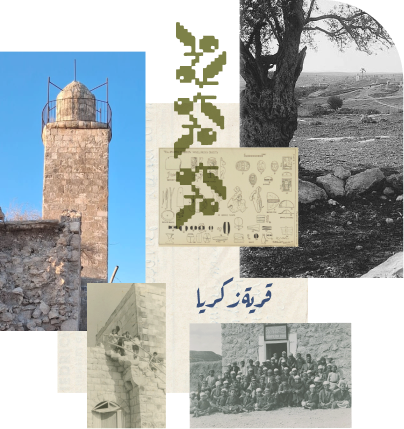
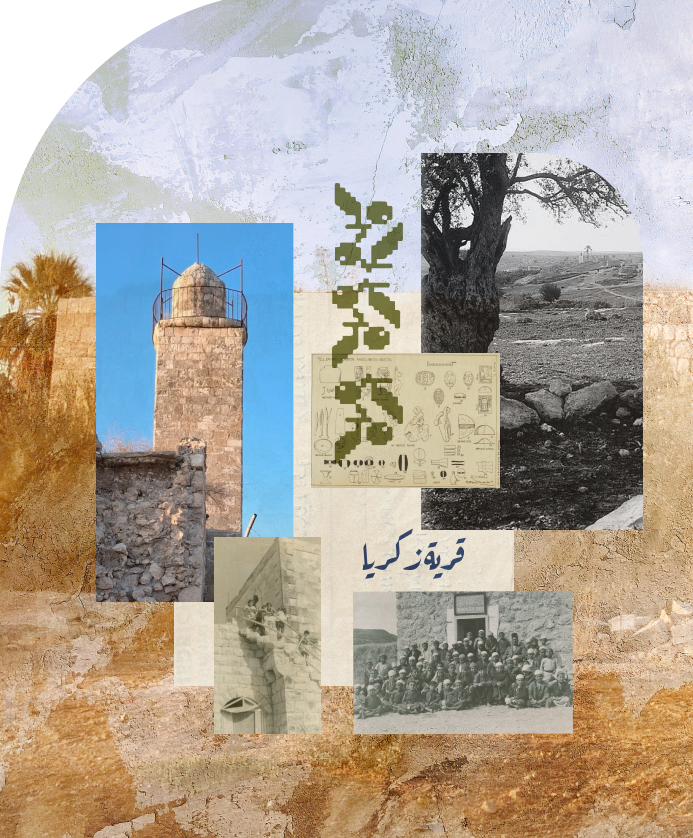
One is the village of Zakariyya southwest of Jerusalem, whose existence is evidenced from the Byzantine period to its depopulation by Israel in 1950.

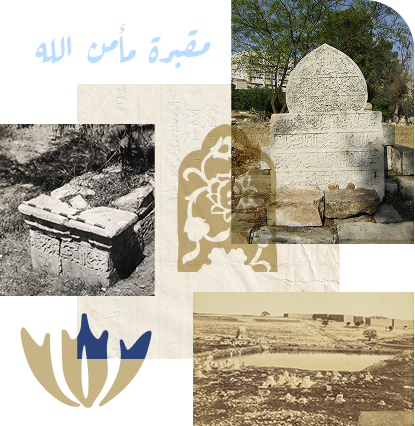
The other is the neglected Mamilla Cemetery, which served the Muslim community continuously from the 13th century to the 1920s.

We aim to extend PHJ to other archaeological sites, objects and texts from pre-modern Palestine. We welcome suggestions and feedback.

Our story

Our story begins in April 2022, when Tawfiq and Yossi met on a balcony overlooking the beautiful spring blossoms of Palestine-Israel.

We come from different disciplines. Yossi is a historian of the Islamic Middle East, with expertise in medieval Arabic texts about law, society and maps. Tawfiq is an archaeologist and art historian, who has participated in many local and international excavations and researched the miniature paintings of medieval Central Asia.

Our research paths did not start with Palestine-Israel, but over time we returned to the history of the land that brought us together. We realised that the late antique, medieval and early modern history of Palestine has been hijacked by modern agendas, overshadowed by both the preceding biblical era and today’s Israeli-Palestinian conflict. Archaeologists have largely focused on biblical layers, often treating the last 2000 years as debris unworthy of study.

We agreed that Palestine’s history, from the Romans to the Ottomans, needs to be told from the perspective of the people who lived there, and through the material remains they left behind. In this period, from 300 CE to the end of the Ottoman period in 1917, Palestinian identity and the human landscape were formed. We therefore aimed to offer a nuanced, non-exclusivist narrative that acknowledges the dynamic interactions between Muslims, Jews, Christians and others. These interactions were sometimes amicable, sometimes tense – but the land was always shared.

We were also driven by an overwhelming sense of urgency about reclaiming the memory of the Palestinian landscape. Actions taking place on the ground are actively transforming the landscape and the ways in which its past is understood, thereby obscuring and distorting it beyond recognition. Through PHJ, we want to highlight the tragic loss our land is undergoing, not only in lives but also in heritage.

We developed our ideas when Tawfiq was a visiting fellow at QMUL in February–March 2025. A stakeholder workshop was held at QMUL in March 2025, including representatives of the Barakat Trust, Culture in Crisis at the Victoria and Albert Museum, the Britain Palestine Project, and other specialist academics and curators. Together with Nadine Aranki and Gabriel Polley, experienced Palestine heritage consultants, we applied to a QMUL Impact Fund Exploratory Award to co-develop educational resources on the medieval, post-Crusader history of Palestine.

It is our hope that Palestine Heritage Journeys will grow to become a reliable and accessible resource for local and international audiences. We plan to expand the website so that it includes other sites from Islamic-era Palestine, and to accompany the site with a co-authored book telling the history of Palestine from 300 to 1917 CE through journeys to select sites, monuments and artefacts, exploring the way they are now remembered, forgotten or erased.

Meet the team
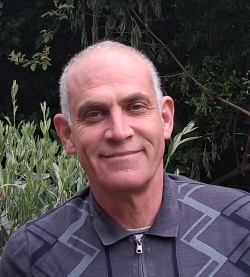
Dr. Tawfiq Daʿadli
Tawfiq is a lecturer in Islamic and Middle East studies and art history at the Hebrew University, and is currently head of the Art History Department. An archaeologist by training, Dr. Daʿadli has published widely on the Umayyad-era palaces of the Jordan Valley and the Mamluk-era markets and cemeteries of Jerusalem. His recent research project concerns the town of Ludd before 1948, reconstructing the city’s spatial and social history in the century before the city’s erasure.
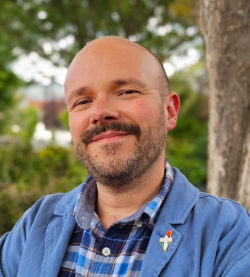
Prof. Yossef Rapoport
Yossef is a professor of Islamic history at QMUL. He is historian of the Arabic-speaking Middle East in the medieval Islamic period, with specialisation in social and legal history, and the history of cartography. His recent book, Becoming Arab: The Formation of Arab Identity in the Medieval Middle East (Princeton University Press, 2025), includes a study of villages in the hinterland of Jerusalem through a collection of 14th-century legal documents preserved in the Islamic Museum of al-Aqsa Mosque.
Dr. Gabriel Polley
Gabriel is a historian with a PhD in Palestine studies from the University of Exeter. Palestine in the Victorian Age: Colonial Encounters in the Holy Land (I.B. Tauris, 2022), his first book, explored the roots of Zionism among British travellers to late Ottoman Palestine. His writings on history, politics and culture have been featured by a wide range of publications, and he also works in communications for the development sector.
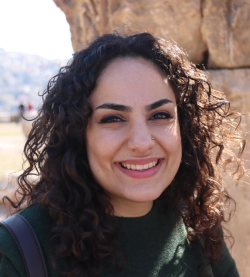
Nadine Aranki
Nadine is a Palestinian curator, cultural worker, facilitator, coordinator and content producer based in London. Aranki currently works in human rights and migration. She is the author of the 2025 report Conversations with Culture, Heritage and Tourism Actors in Palestine: Needs and Challenges within a Context of Extreme Military Violence. She co-curated The Many Lives of Gaza, a 2024 touring exhibition shown in the UK, and is a member of the Liberatory Archives and Memory network, other cultural and educational forums.
Akili Lamour
Akili is a London-based Brand & Web Designer, specialising in thoughtful brand identities, websites, and designs for purpose-driven brands, grassroots collectives and non-profits across the UK. She is passionate about making a positive change to the world (big and small) through her work with teams that feel the same.
Archeological sites
Village of Zakariyya
Mamilla Cemetery