Zakariyya was an agricultural village, and much of village life revolved around the harvests. Until the early 20th century, villagers used traditional stone presses to produce olive oil. These fell out of use, however, and villagers took their olives to the modern presses in ʿAjjur and at the Catholic monastery in Bayt Jimal.
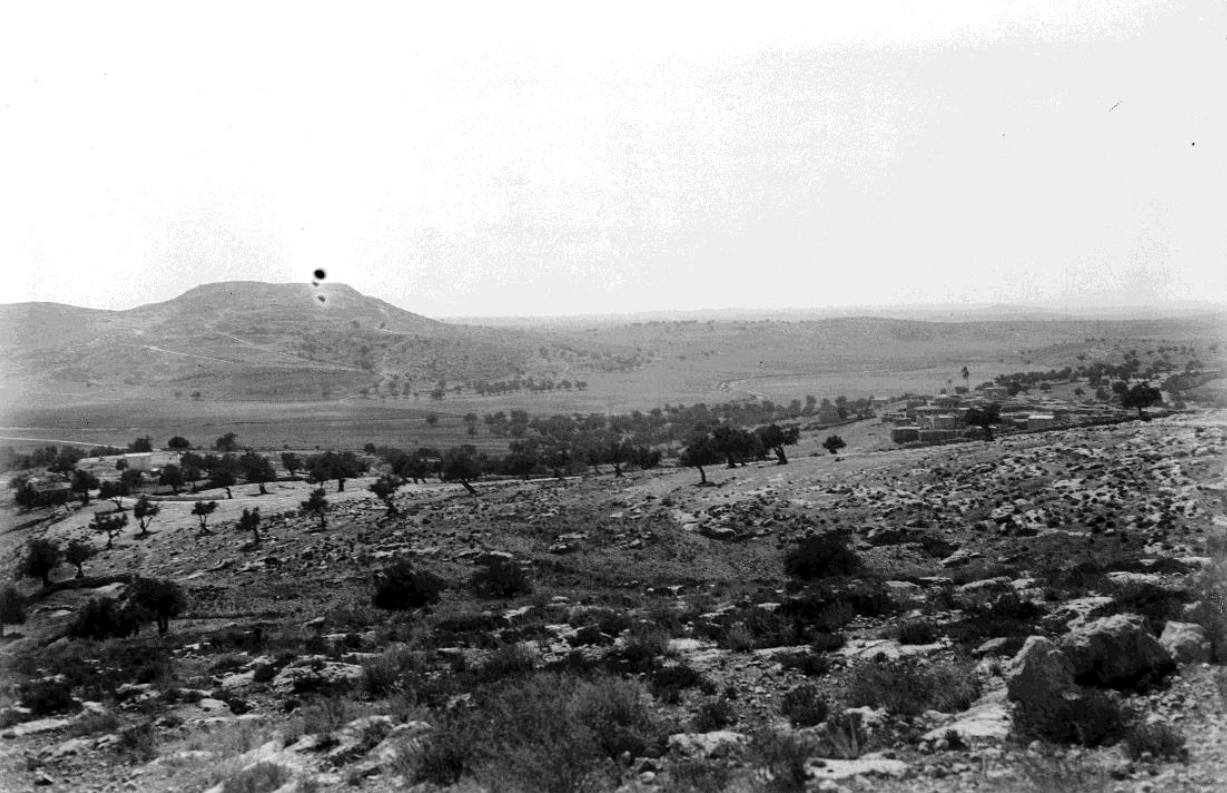
This 19th-century view of Zakariyya shows some of the village’s olive groves. Courtesy of Khader Salameh.
Grain was the most important crop in Zakariyya. In the 16th century, the village paid as much as 6,500 silver coins in tax to the Ottoman authorities on its grain produce. Both men and women worked in the fields. When the harvest was gathered in, it was taken to an area just outside the village called al-jurun, where it was threshed and winnowed with the help of oxen. Some of the produce was then taken by the Hebron waqf, while villagers would also use grain to pay for other goods and services, such as at barbers and butchers, of which Zakariyya had several by the 1940s. In 1947, ʿAbd al-Hamid Ahmad ʿAwda built a mill for the people of Zakariyya to turn their wheat into flour.
Across Palestine, villagers were divided into hamulas or clans, consisting of a group of families. In Zakariyya, the main hamulas were Abu Labban, al-Khamur, al-Shamarkha, ʿAdawi, al-ʿAyasa and al-Faraja, names which remain common among refugee families today. Multigenerational families lived together in large stone houses. Several of Zakariyya’s houses had courtyards, around which were apartments occupied by several families in a hamula; these extended homes were called a hara, or residential quarter.
Women had a difficult life in Zakariyya, marrying early and bearing many children. But we know that when their rights were threatened, they fought back. For instance, in March 1873, Sara al-Khamuri took her husband Muhammad ʿAdawi to the Jerusalem Sharia Court. She accused him of frequently disappearing for several weeks and returning empty-handed, and failing to repay money he borrowed from her four years earlier. In the same month, two men named Mustafa and ʿAli took a woman, Khadija bint Hussayn, to court, claiming that she had been married to them concurrently. After her accusers failed to produce valid marriage certificates or witnesses, Khadija won the case. Historian of Zakariyya, Khader Salameh, believes that the sham marriages could have been arranged without her assent by Khadija’s unscrupulous brothers, who may have hoped to pocket the dowry payments.
By the mid-19th century, Palestine was becoming more exposed to Western influence. Many tourists travelled to Palestine, desiring to see the Holy Land with their own eyes. Zakariyya, a small Muslim village with no obvious connection to the events of the Bible, was not a major destination. Yet in October 1898, Frederick Bliss, an American archaeologist, arrived in Zakariyya. Bliss worked for the Palestine Exploration Fund (PEF), an organisation founded in London in 1865, which combined British colonial ambition to one day possess Palestine, with a zeal to “prove” the truth of the Bible with “evidence” from ancient remains. He headed a major excavation of Tel ʿAzekah (which he called Tell Zakarîya) next to the village, where the PEF hoped to discover a long-lost Biblical city.
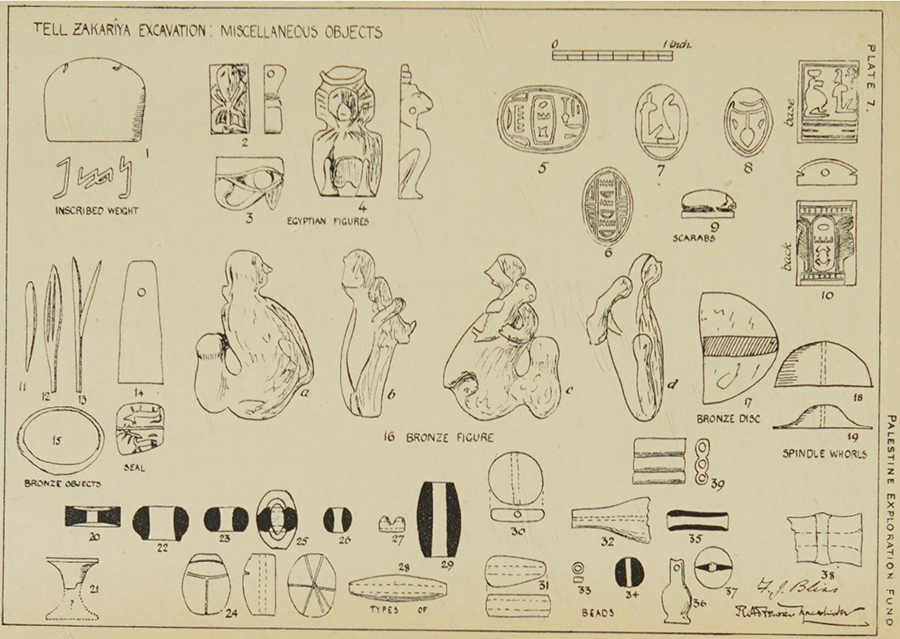
Drawings of artefacts found by the PEF during their Tel ʿAzekah excavation, 1899.
The Victorian archaeologists viewed Palestinians as a source of cheap labour for their excavations. Bliss hired residents of Zakariyya with an average pay of 10½ pence per day – only £4 in current values – including a reward for each artefact a villager could bring to him. In Bliss’s words,
At first we employed only men and boys, as the women and girls were shy, but after we had gained the confidence of the whole village, the female element predominated. We succeeded in training a band of excellent work-people, some of whom followed us from site to site, becoming members of the camp. Four names on our first week’s pay-roll appear again on our last regular pay-roll. Under the firm but kind discipline of Yusif [Kanaʿan, the PEF’s Lebanese employee], they worked not only faithfully but with intelligence, showing sometimes a genuine interest in the progress of the work.
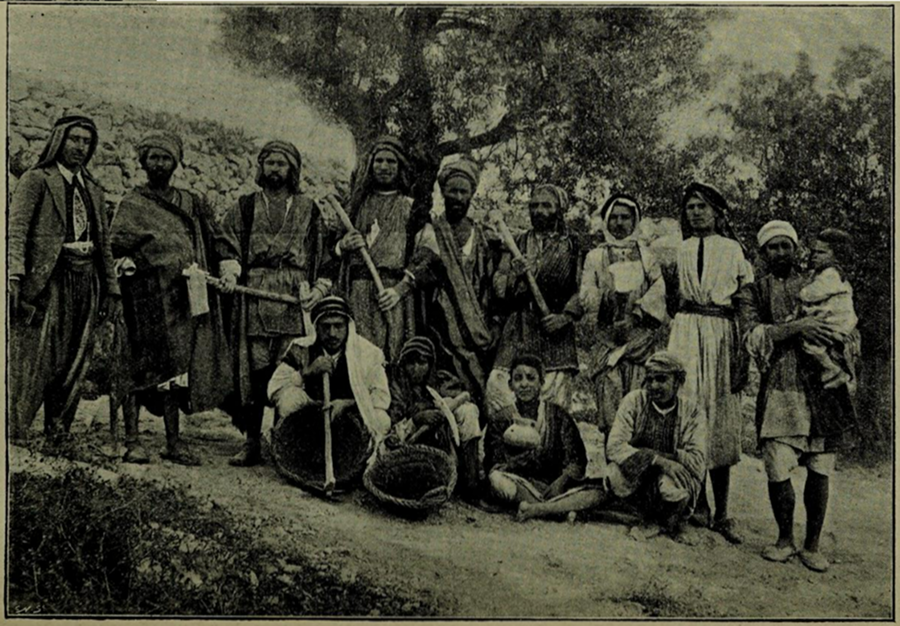
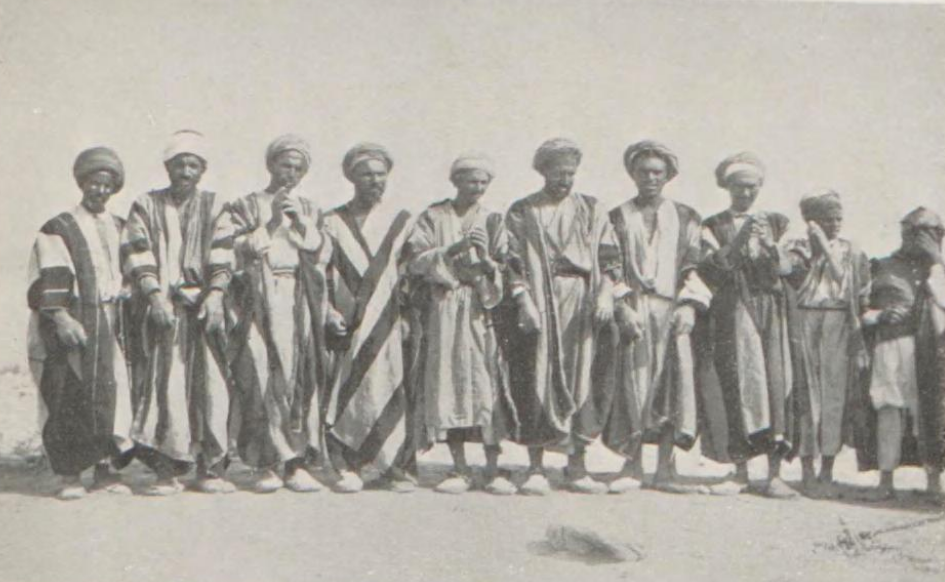
A group of Palestinian workers for the PEF, possibly from Zakariyya, in the late 19th century. Courtesy of the Palestine Exploration Fund.
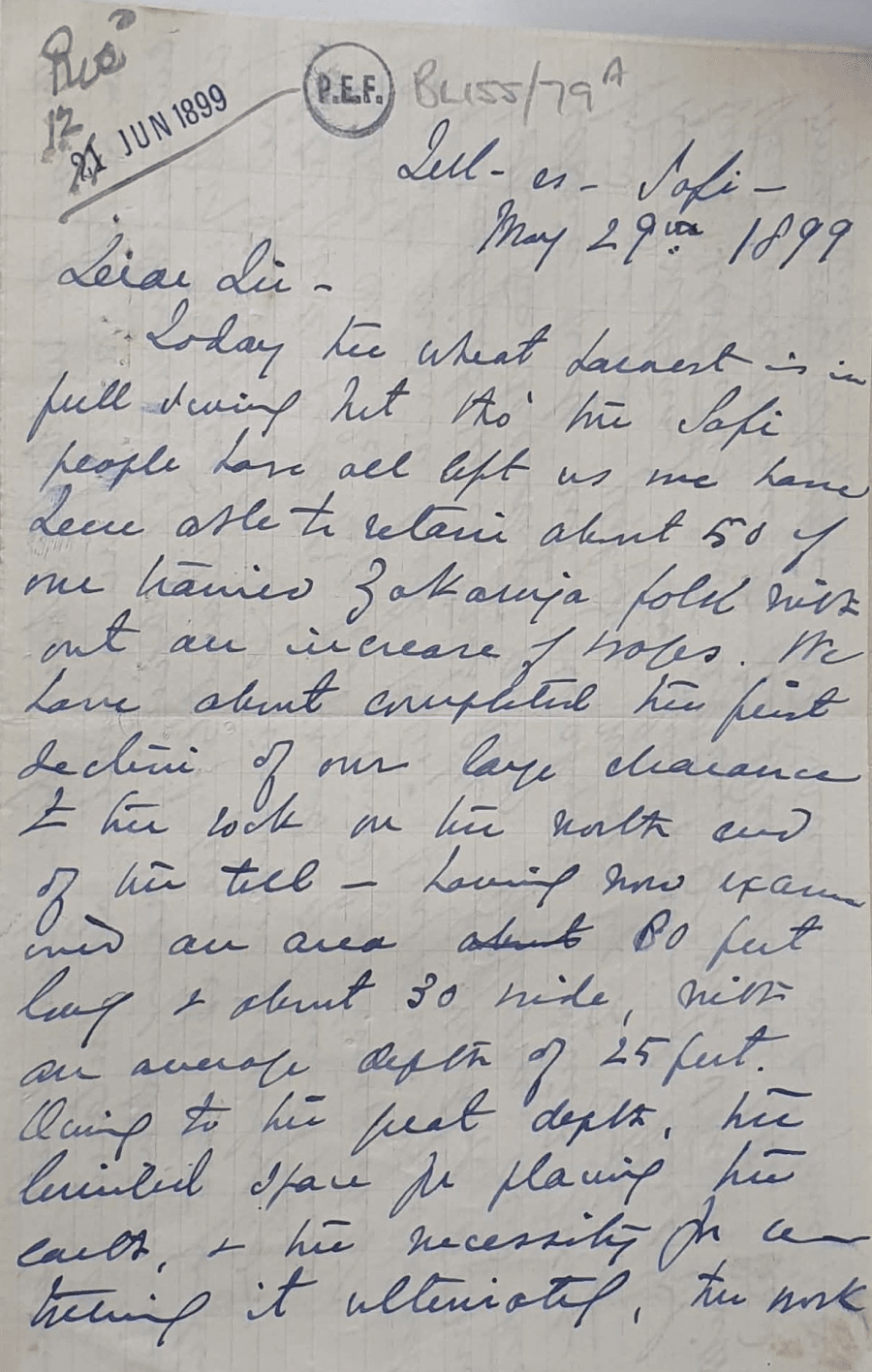
Zakariyya’s inhabitants served the PEF well. In a letter of May 1899, Bliss noted that although “the wheat harvest is in full swing … we have been able to retain about 50 of the trained Zakarîya folk.” Two months earlier, Bliss had complained that “The workmen were given a sharp lecture” after missing some artefacts in a pile of debris, after which they “are becoming more careful.” On the whole, however, Bliss was satisfied, and after moving to excavate another tel near a different village, he lamented “the obstinacy of the people, who contrast unfavourably with the cheerful and active inhabitants of Zakarîya.”
A letter written by Bliss near Zakariyya, mentioning the workers from the village. Courtesy of the Palestine Exploration Fund.
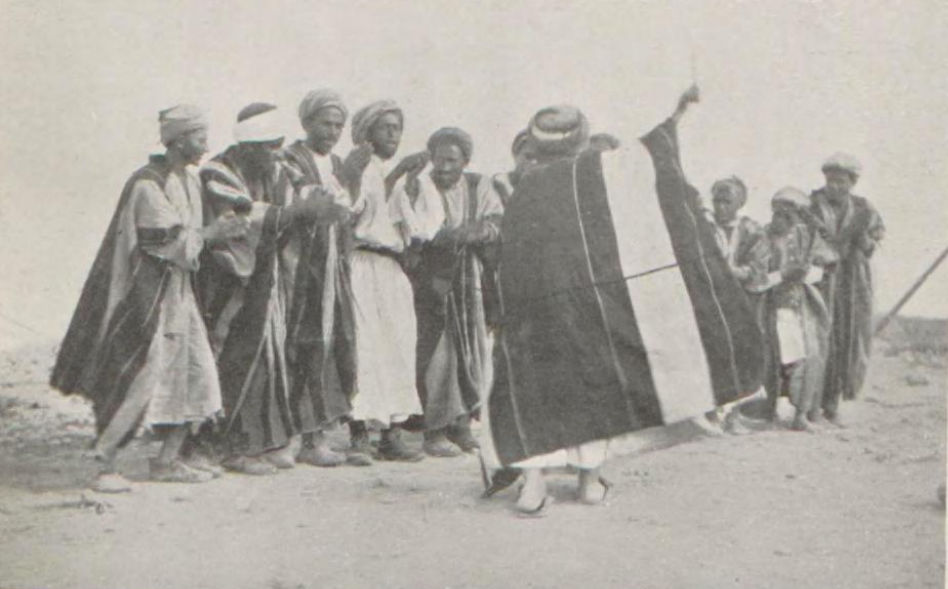
Bliss’s colleague, Robert Macalister, also wrote warmly of his time in Zakariyya, in his article “A Day in a Fellah Village”. On 18th September 1899, “an exciting day in the annals of Zakariya”, Macalister asserted that “No less than five weddings have taken place.” After the archaeologists tried to politely turn down one wedding invitation, the groom “gravely informed us that unless we accepted his hospitality he would divorce his wife.” Another of the brides “refused to start till our presence in the crowd should honour the ceremony.” Macalister wrote a description of the music which accompanied the wedding celebrations, and photographed some of the men of Zakariyya during a dance.
Men of Zakariyya during a dance, 1899. Courtesy of the Palestine Exploration Fund.
Overall, the PEF archaeologists made a good impression on Zakariyya, as the village did on them. Bliss wrote that after the end of the dig, when he visited the village,We were [treated] simply [as] old friends, honoured guests, bringing nothing, receiving unbounded hospitality. As we sat in the upper room of Aḥmed ‘Ali, waiting for the platters of meat and rice to be brought in, the circle of men increased till the place was crowded. Cordial were the greetings, hearty the inquiries for Mr. Macalister and Yusif, many the humorous reminiscences of past events.
By the early 20th century, Zakariyya was flourishing, and offered opportunities which attracted new residents. A native of Hebron, ʿAbd al-Razzaq Hussayn al-Dwayk, moved to Zakariyya before 1916, making a large purchase of village land. Unlike most families in Zakariyya, where polygamy was rare, ʿAbd al-Razzaq had several wives. One of his sons, Hussayn, opened a grocery shop in the village, named Dukkan Ghazal. Another son, Hijazi, became a judge in local and tribal disputes, and returned to Hebron in the 1940s.