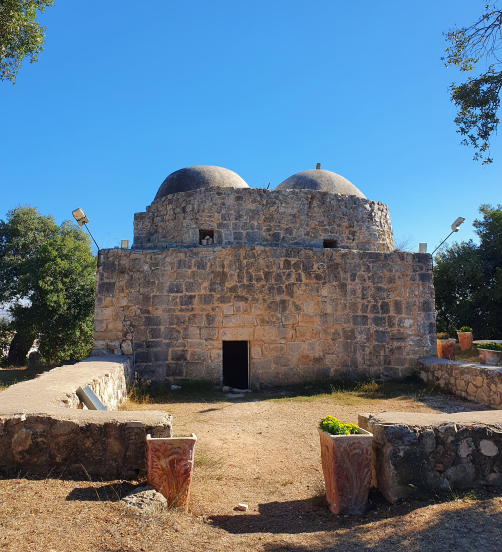
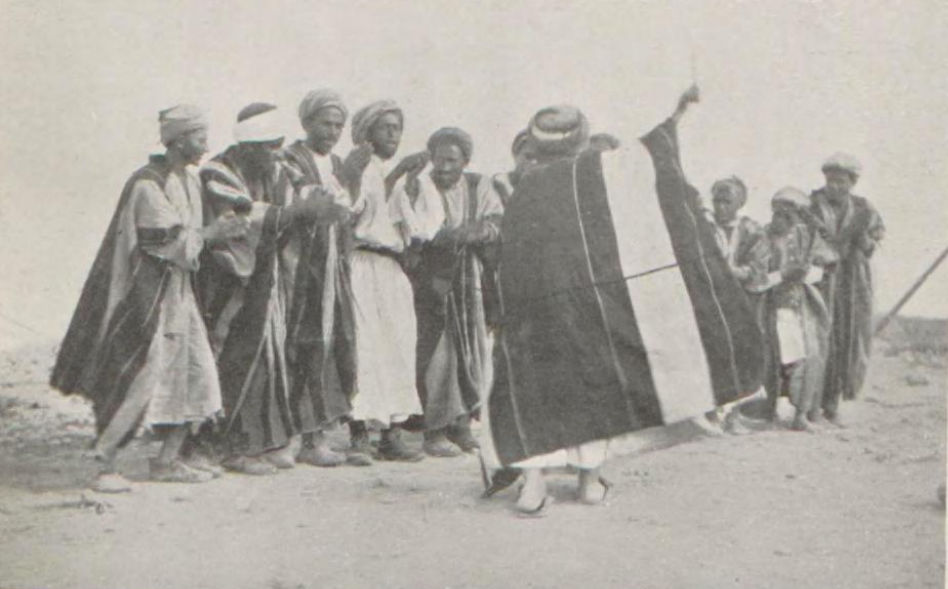
At the heart of religion in rural Palestine were maqam shrines dedicated to Muslim saints. The mosque of Zakariyya was considered a maqam to Nabi (prophet) Zakariyya, and there was a shrine adjacent to the mosque. Zakariyya had several other shrines: Maqam al-Shaykh Hassan in the centre of the village, Maqam al-Shaykh Ibrahim northwards, Mugharat al-Shaykha al-Sayha in a cave east of the village, Maqam al-Salahi and Maqam al-ʿUmari to the south, and Maqam Fatima al-Barri. Only women, it was believed, could visit the Shrine of Fatima al-Barri. An early 20th-century observer recorded:
The women burn oil lamps there; no man dare come near the place or touch the branches of the trees or the herbs which grow there. If a man ventures to enter into the cave of the makām, he will be taken with fever and also lose his understanding. A stranger approaching the place in ignorance will be warned away by the villagers.
The saints commemorated in the maqams, and at natural features such as springs, trees and caves, were not merely viewed as respected historical figures. They were considered as powerful beings who regularly intervened in the here and now. This is vividly illustrated by Ghassan Zaqtan, a Palestinian poet and novelist whose family was expelled from Zakariyya in 1948, who in this passage references historical events such as the Persian invasion of Palestine in 612 CE, alongside the Islamic belief in supernatural beings such as jinn:
Everyone … accepted the appearance of the Tree of Yusif and its transmigration from the Bulis Valley to the eastern entrance of the village, the brides of the jinn that coursed through the shrine of the prophet Zakariyya, and the ambulations of Persian soldiers in the cave of Our Wandering Lady which they protect from the dervishes [holy men] that rise towards Jerusalem.
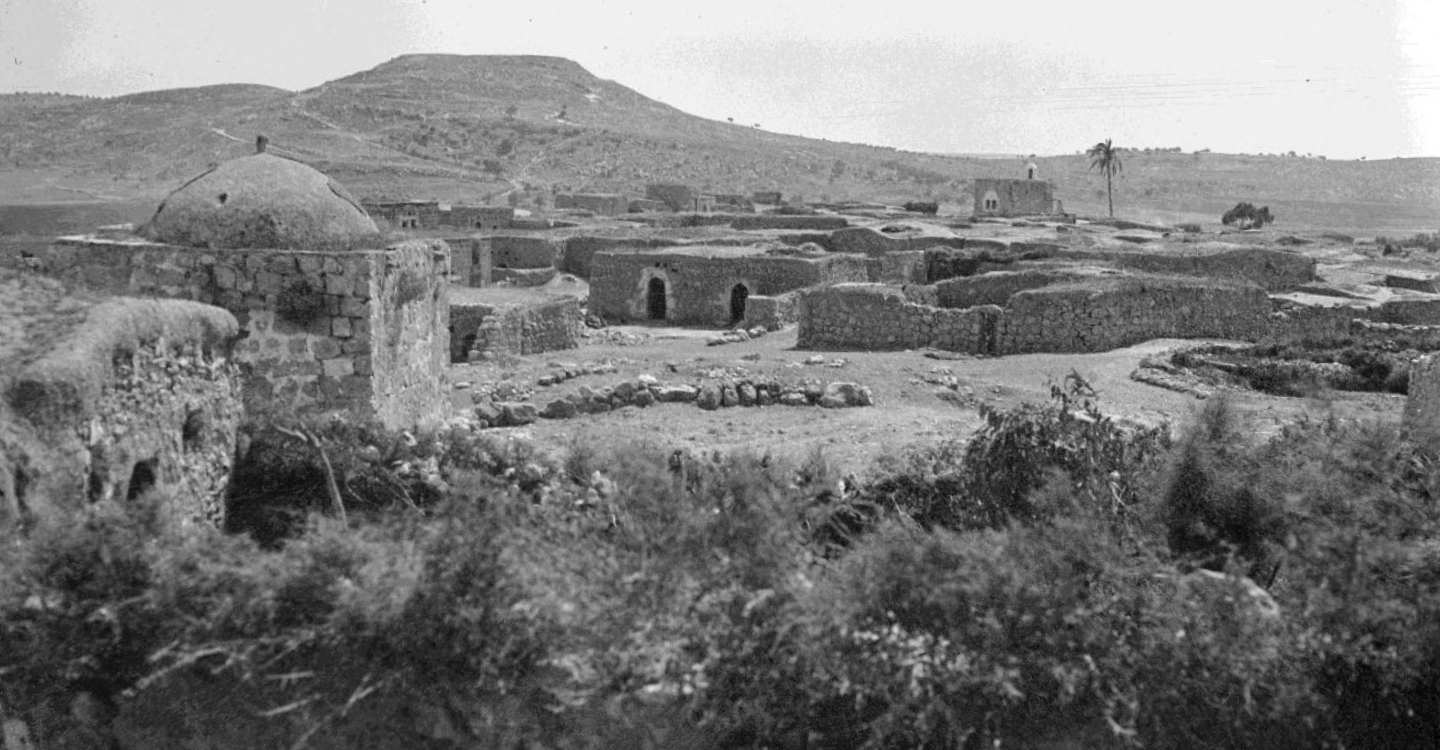
In this 19th century photograph of Zakariyya, one of the village’s domed shrines is visible on the left. Courtesy of Khader Salameh.
One of the wealthiest families in the village, the Abu Labban family, was particularly renowned for their faith. Members of the Abu Labban family had the honorific title of shaykh for men or shaykha for women attached to their names. Perhaps seeking to bolster their social position, family members encouraged legends around their supposed supernatural powers. Western visitors to Zakariyya in the late 19th century reported hearing of a Shaykh Salah Abu Labban, who could make “a sea and ships” appear inside his mouth. It was warned that anyone who attempted to discover the mysterious ancestry and source of power of the Abu Labbans “will die the same year”, as would any member of the family who spilled their secrets. Also in the late 19th century, two Abu Labban brothers, ʿAlayan and Muhammad ʿAbd al-Qadir, built a zawiya in the village, a place where Sufi Muslims could do dhikr (ritual chanting) and visiting Sufis could stay overnight.
What set Zakariyya aside from other villages, however, was its mosque, the antiquity of which was rare in Palestine. The mosque’s prayer hall is divided into six bays, roofed by cross-vaults supported by two central piers. The two southern bays are medieval, possibly from the 14th century. A spiral staircase leads to the top of the tall minaret, with a small cylindrical domed kiosk opening to a balcony. But today, no call to prayer is heard.
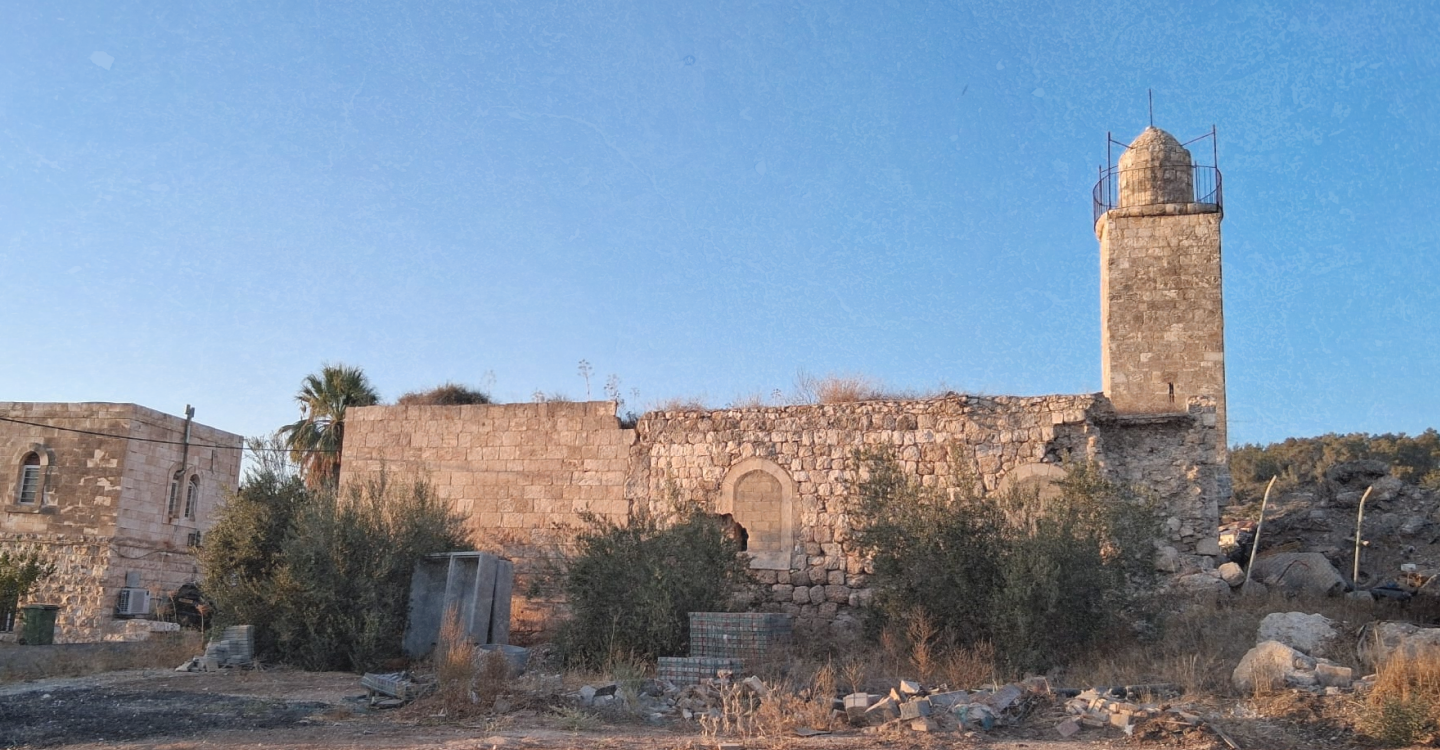
The mosque of Zakariyya and a surviving Palestinian home as of 2025. © Yossef Rapoport, 2025.
Little more about the mosque’s older history has been found, though we know that in the 1940s, the imam of the mosque was named ʿAbd al-Rahman Mishaʿal, while the muezzin (who performed the call to prayer) was Khalil Husayn ʿAdawi. A preacher was also appointed by the waqf of Hebron, to serve in Zakariyya and other nearby villages. Waqf records show that the preacher also helped to resolve disputes between Zakariyya and ʿAjjur.
In the late 1930s and early 1940s, the mosque underwent restoration. Originally requested by the villagers of Zakariyya, it would become a source of bitter disputes between them, waqf officials and the contractors appointed to undertake the work. After evaluating the cost of restoration at £200 – around £10,000 today – the waqf viewed the project as an opportunity to also conduct a land survey of Zakariyya and increase taxation, partially to fund the work. The villagers refused to allow the survey, no work was conducted for several years, and an irate official in Hebron wrote to the Supreme Muslim Council in Jerusalem asking for the salary of Zakariyya’s imam to be stopped. Finally, on 1 March 1941, the Hebron waqf appointed a builder from Zakariyya, Theeb Mahmud Hassan al-ʿAyasa, to restore the mosque.
This was not the end of the saga, however. Al-ʿAyasa’s fellow villagers quickly accused him of using poor-quality materials – not without reason, as two months after work began, arches within the mosque threatened to collapse. When al-ʿAyasa brought another builder from Bayt Jala near Bethlehem to help him, this assistant left immediately after seeing the condition of the mosque. This time, it was decided that 10 percent of al-ʿAyasa’s pay should be withheld. This seems to have had the intended effect, and work now proceeded with fewer complaints. When a wall of the shrine of Nabi Zakariyya was demolished, in order to rebuild the crumbling structure, a mosaic floor was discovered – possibly marking the location of the long-lost Byzantine church.
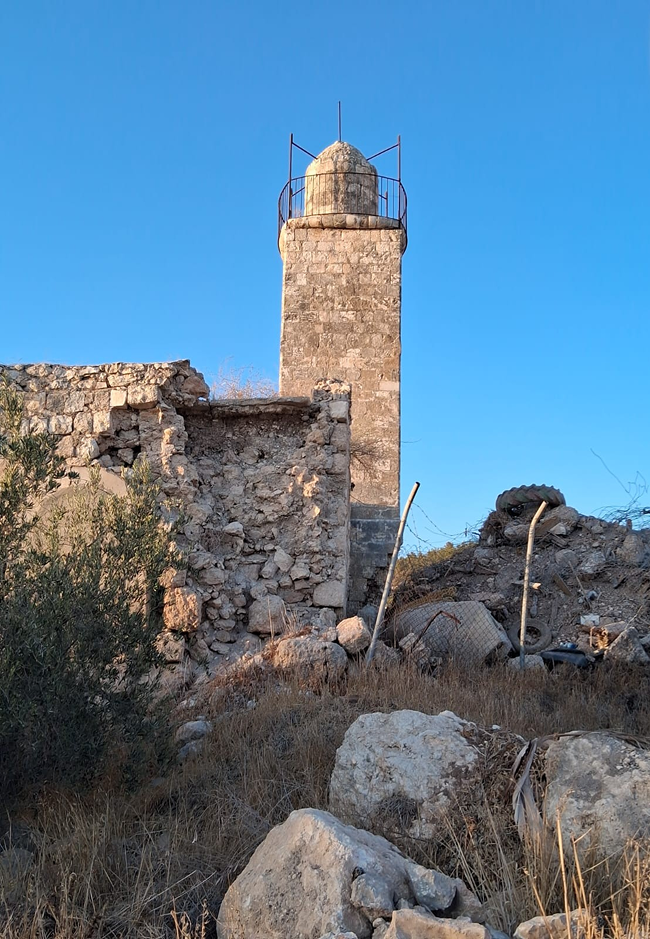
The minaret of Zakariyya mosque as of 2025. © Yossef Rapoport, 2025.
Today, the mosque of Zakariyya is one of few buildings of the Arab village which still stands, though in an increasingly dilapidated and dangerous condition as a result of the Israeli authorities’ systematic disregard for Palestinian heritage. Refugees from Zakariyya and their descendants have this story about the mosque, as reported by Sami al-Jundi, a Palestinian former militant and peace activist, whose mother was from the ʿAdawi family of Zakariyya:
According to the legend I had often heard from the old people in Dheisheh, the Israelis had tried unsuccessfully to topple the minaret, using bulldozers. A Palestinian was brought to drive the bulldozer for the final attempt. In the middle of the operation, his arm became paralyzed. He jumped out of the bulldozer and ran away. So the minaret remained, damaged, but standing tall and proud.
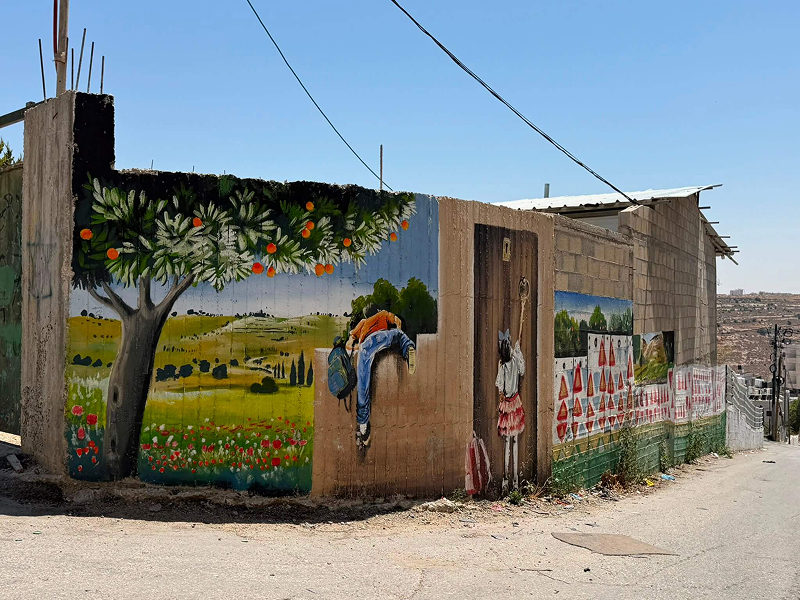
A street in Dheisheh refugee camp. © Tawfiq Da
ʿadli, 2026