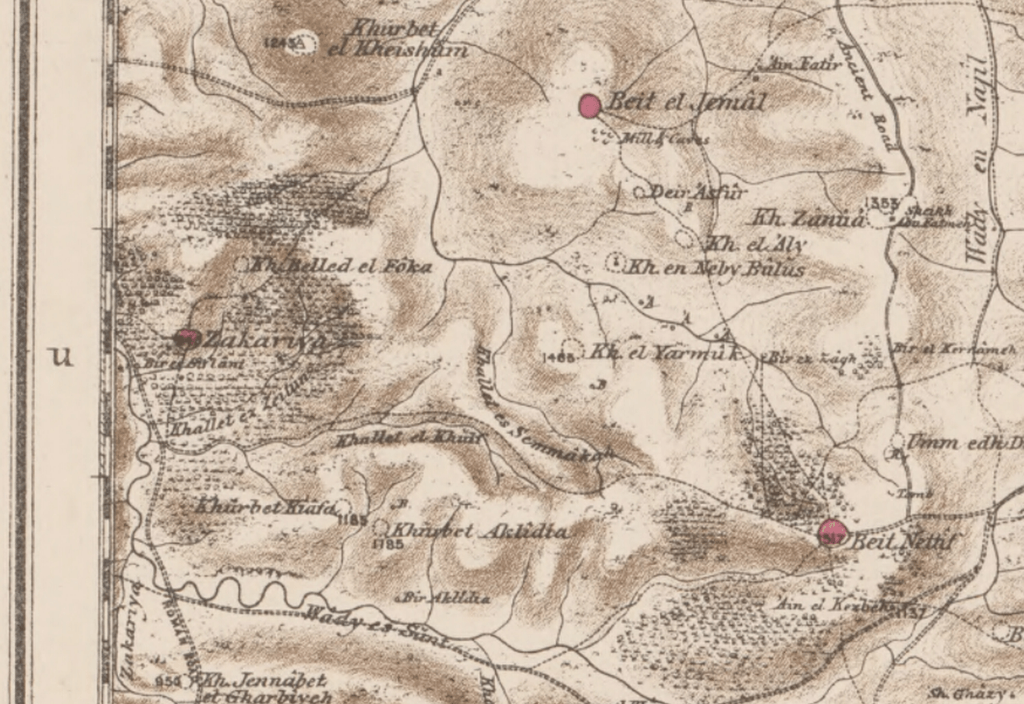
Map of Zakariyya and the surrounding villages, produced for the Survey of Western Palestine in the 1870s. Courtesy of Palestine Open Maps
In summer 634, the army of Arab Muslims passed close by Zakariyya. The Battle of Ajnadayn, between the forces of Islam and of the Byzantine Empire, may have taken place just south of Zakariyya, at a site named al-Janaba. Victory enabled the Muslim forces to expand their conquest across Palestine and the wider Eastern Mediterranean.
Life in Zakariyya did not initially change much after Palestine gained new masters. The same families lived in the village, and continued to practice Christianity. Under the early Islamic caliphates, conversion to Islam was gradual and without compulsion, often made for the social advantages offered by the new religion. A Crusader-era document mentions that a village called Dayr Dakariyya – dayr meaning monastery, “Dakariyya” probably a corruption of Zakariyya – was owned by the Syriac Orthodox Church under Islamic rule, before the Crusaders arrived.
The fall of the Latin Kingdom in 1187 was an important turning point. Zakariyya was now a Muslim village. The Christian shrine, which once attracted pilgrims from distant lands, faded into memory. Instead, Arab and Islamic identity became important to the villagers. Some villagers considered themselves members of the Banu ʿAmir tribe, a tribe from the Arabian Peninsula, even though they probably had no ancestral roots there.
Shaping the life of Zakariyya for the next seven centuries was the fact that the whole village and its agricultural land was now part of the waqf system. Zakariyya fell under the waqf of the Ibrahimi Mosque in Hebron (a city also known by Palestinians as al-Khalil, another Arabic name for the Prophet Ibrahim/Abraham). Waqf records, preserved in Hebron or in Jerusalem, form a key resource for Zakariyya’s history.
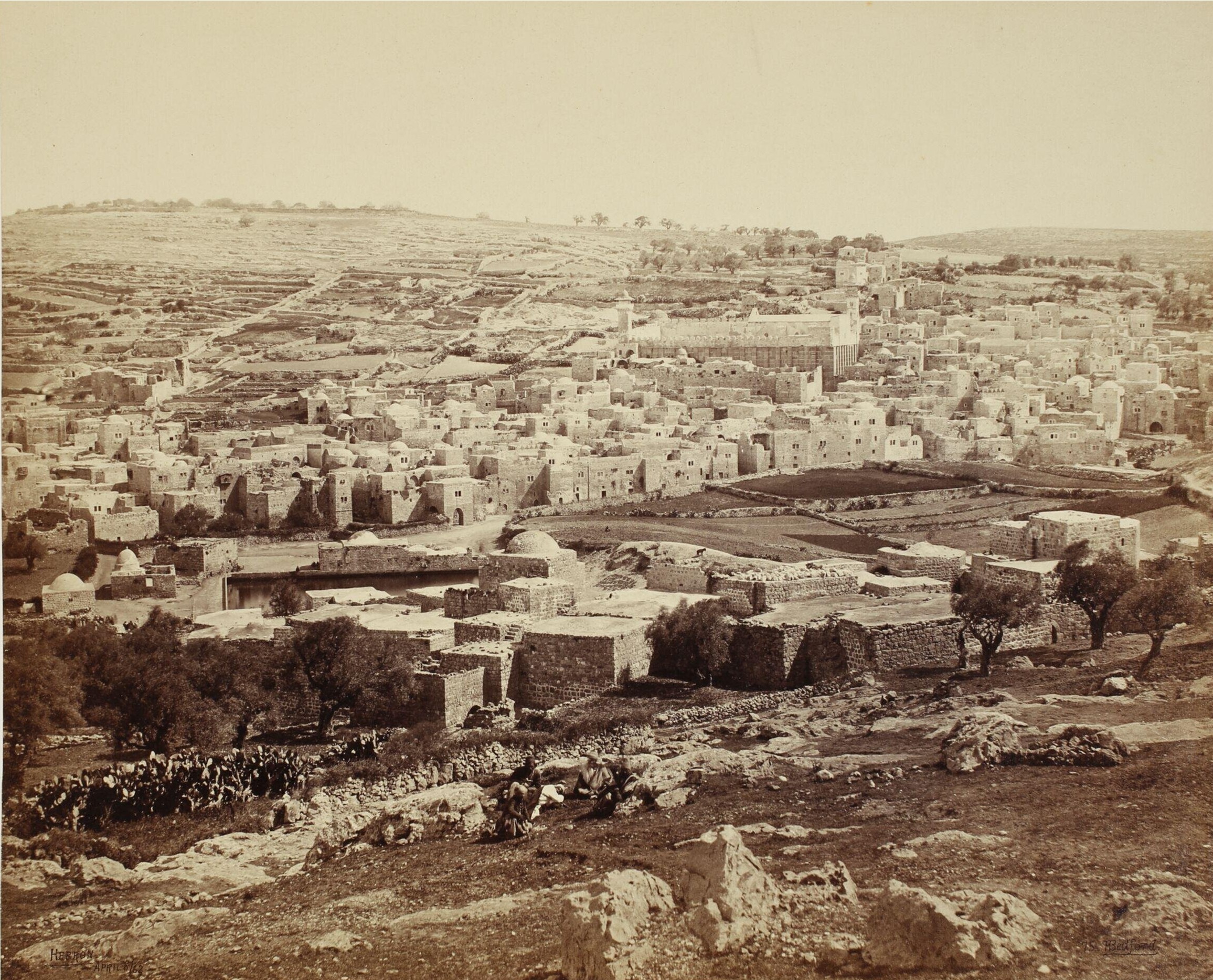
View of Hebron in the 19th century, with the Ibrahimi Mosque visible in the city. Courtesy of the Victoria and Albert Museum
One of the earliest records discovered details how Farraj bin Saʿd bin Furayj and Nassar bin ʿAmara bin Saʿid, two headmen from Zakariyya, appeared before waqf officials in April 1309, during Palestine’s period of Mamluk rule. They took an oath that the peasants in Zakariyya would cultivate the village lands, and would not commit evil deeds, nor display enmity towards the agents of the waqf. Moreover, they promised to detain any villager who caused such strife and present them before the waqf authorities. Failure to do so would subject them to financial and disciplinary penalties. Farraj and Nassar are two of the earliest residents of Zakariyya from the Islamic period whose names we know.
In many documents dating to the Mamluk and Ottoman periods, Zakariyya is referred to as “Zakariyya al-Battikh” – Zakariyya of the Watermelons. The name has disappeared in more recent centuries, and we do not know exactly why the village got this name. Was Zakariyya well-known for producing the tasty fruit, or was there some anecdote that gave the village this epithet? Whatever the reason, the name is a striking connection between a historic Palestinian village and a contemporary symbol of Palestinian identity.
View of Zakariyya village in the early 20th century, by American Colony Photo Department. Courtesy of the Library of Congress, Prints & Photographs Division.
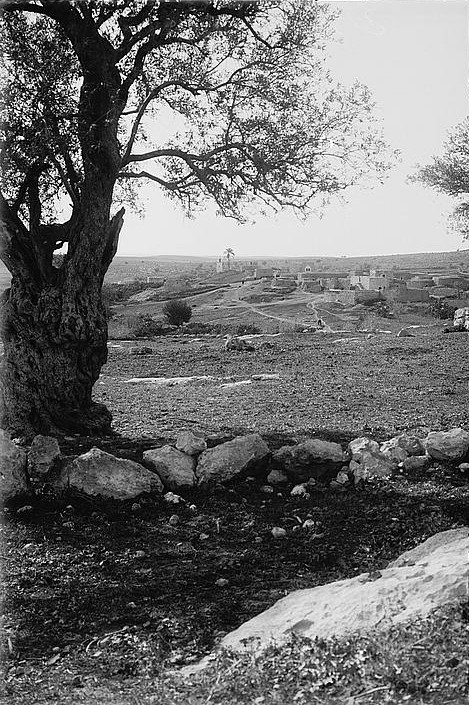
While the Byzantine shrine was long gone, Zakariyya continued to host Christian travellers. One was Felix Fabri, a Dominican friar from Switzerland who journeyed to Palestine in the 1480s. Fabri and his companions passed through Zakariyya on their way from Hebron to Gaza. They stayed in a khan, an inn for travellers which was once a common feature across the Islamic world, which stood on the edge of Zakariyya. Looking for firewood to cook their dinner, Fabri and his companions “pulled sticks out of the fences of the fields and gardens”, after which some Zakariyya residents “threw stones at us, and chased us into the inn.” Other villagers brought them chickens, bread and water, and the European visitors “had a good and merry supper.” Fabri also mentions the “fair mosque” of Zakariyya, which one fellow pilgrim disrespectfully “defiled … [and] brought us into extreme peril”; luckily for them, the group “departed before anyone came into the [mosque].”
With the conquest of Palestine by the Ottoman Empire in the 16th century, we gain access to census data, for the first time giving us an idea of how many people lived in Zakariyya. Ottoman censuses did not count all individuals, but rather heads of families. A late 16th century census counted 47 heads of families, specifying that all were Muslims. Assuming an average of five to seven members per family gives us a figure of roughly 280 residents of Zakariyya at the time.
Feuds between villages were common in rural Palestine, and Zakariyya was no exception. In February 1596, a document records a large-scale attack on Zakariyya, involving residents from the neighbouring village ʿAjjur, and from Rafaʿat, Susin, Bayt Jimal and Bayt Nattif. This force attacked villagers including a woman called Najma, burned doors, stole money and women’s valuable head ornaments named ʿiraqiyya, destroyed beehives, and made off with olive oil and hundreds of cattle, sheep and goats. They also kidnapped the Ottoman police chief, Yaghmur bin Khadawurdi.
This feud continued over decades. In 1644, after a spike of violent conflict, villagers from Zakariyya and ʿAjjur signed a document of reconciliation, or sulh, at a court in Gaza. Witnessed by headmen from villages between Zakariyya and Gaza, the villagers promised not to fight or demand any further justice. In a document signed the next day, it was agreed that five women from Zakariyya would be married to five men in ʿAjjur who were related to the victims of attacks. This traditional form of compensation was called ghurra. Conflicts between the two villages continued all the way to the modern period, however. In a document from over two centuries later, in March 1873, we find a man from ʿAjjur claiming that a man from Zakariyya stole his two bulls – and that he underpaid the agreed compensation fee when he was caught.