Al-Wasiti and Mamilla’s
sacred pathway
“Above his grave is a great building”
According to Asem al-Khalidi, a member of one of Jerusalem’s most prominent Palestinian families with many members buried in Mamilla Cemetery, today, only around 5 per cent of the graves which once existed in Mamilla can still be seen, as a result of the destruction of large parts of the cemetery.
However, the disappearance of tombs in Mamilla is not only a recent phenomenon. In the late 15th century, Mujir al-Din records seeing the grave of an individual named al-Wasiti, “to the south of the dome of al-Kubakiyya, and I do not know any biography of him.” Mujir al-Din noted that “above his grave there is a great building.” However, the Syrian traveller and Sufi scholar, ʿAbd al-Ghani al-Nabulsi, who visited Mamilla in 1690, did not mention this building, whereas he did describe other such grand tombs or turbas. It seems that by the late 17th century, the “great building” had already disappeared.
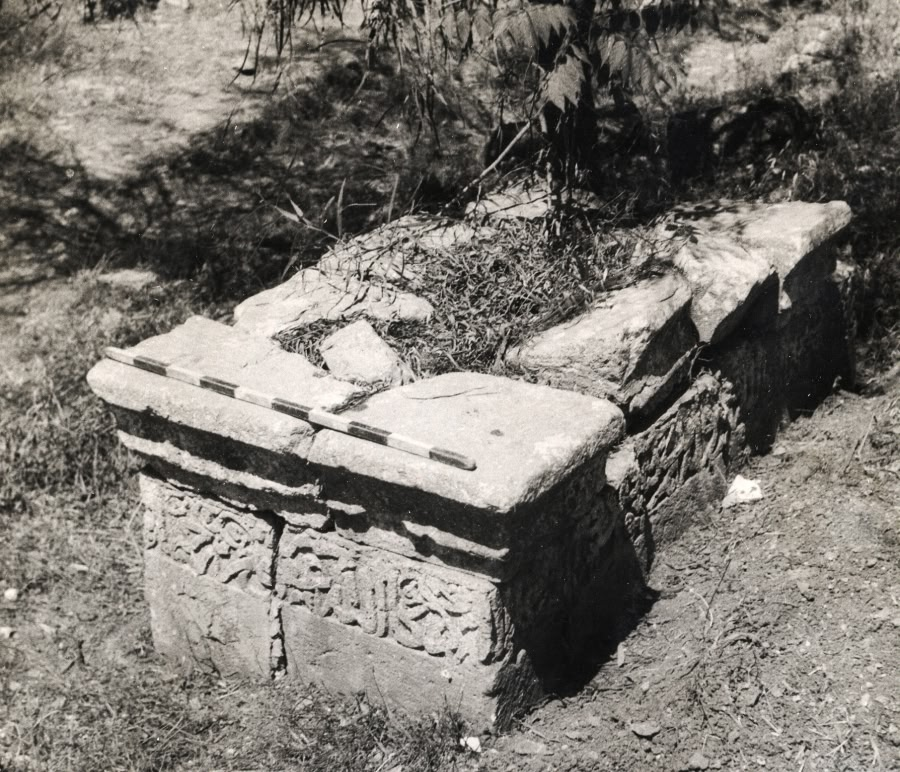
Photo by Hamdi Nubani in 1946. Courtesy of the Israel Antiquities Authority.
Photographs taken by Hamdi Nubani of the al-Wasiti tomb, near al-Kubakiyya, show the inscription in elaborate naskhi or Mamluk Arabic calligraphy running around the tomb:
In the name of Allah, the Merciful, the Compassionate. Everyone that is thereon [the Earth] will pass away [Quran 55:26]. Whoso migrates for the cause of Allah will find much refuge and abundance in the earth, and whoso forsaketh his home, a fugitive unto Allah and His messenger, and death overtaketh him, his reward is then incumbent on Allah. Allah is ever Forgiving, Merciful [Quran 4:100]. This is [the tomb] of ʿUmar b. Ibrahim b. Ibrahim b. ʿUthman b. Kaʿb al-Wasiti. He died on the night of Friday 15 Shaʿban 684 of the [year of the] migration of the prophet [16 October 1285].
Like Mujir al-Din, we do not know much of al-Wasiti’s biography, beyond that he was clearly a significant figure who died in Jerusalem in the early Mamluk period. The name “al-Wasiti” indicates a connection with the city of Wasit in south-east Iraq, founded at the start of the 8th century by the early Islamic Umayyad dynasty, and abandoned in the 16th century. The Quranic verse praising “whoso migrates for the cause of Allah” may also reflect that al-Wasiti travelled, died and was buried far from his original homeland.
Unfortunately, today, al-Wasiti’s tomb has vanished. It is one of hundreds of graves in Mamilla that have either been moved at random within the cemetery or totally disappeared since the site has been under Israeli control. The beautiful lines of Mamluk naskhi survive only in Nubani’s photographs.
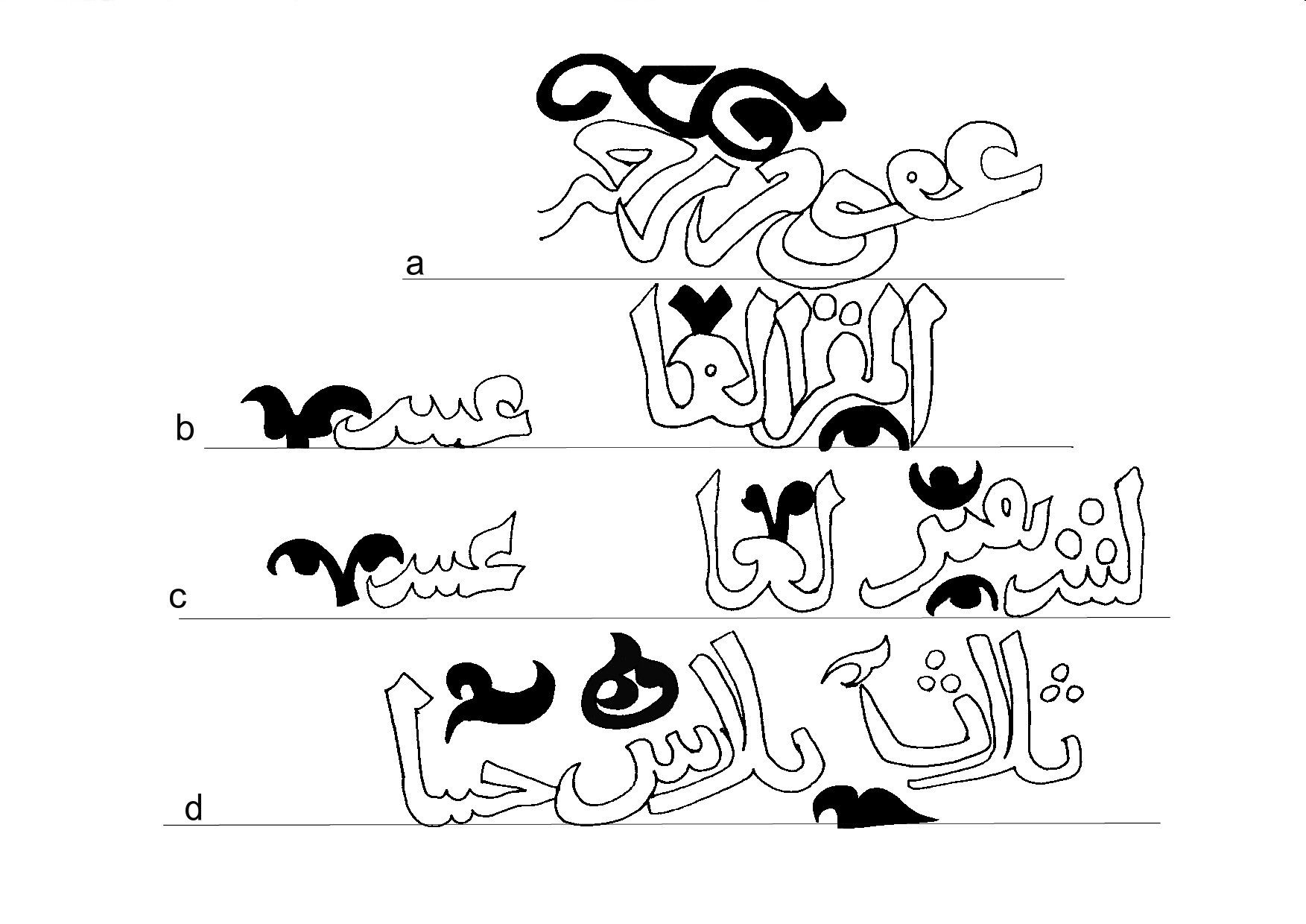
Mamluk scripts on Mamilla tombs:
a – tomb of al-Wasiti;
b and c – tomb of the wife of Aydamur al-Shujaʿi;
d – tomb of Shaykh Husam al-Din, died 1332.
© Tawfiq Daʿadli, 2009.
Another mysterious tomb mentioned by Mujir al-Din as being close to al-Wasiti’s was known as the “Wajadna” grave – Arabic for “we found”. The tradition goes that a traveller was passed by the tomb, reciting from the Quran “And they will find all that they did present before them, and your Lord does not wrong anyone” (18:49). A voice from beyond the grave replied “Wajadna”, we found. Mujir al-Din could give no further information on the tomb, or who was buried there. No trace of the Wajadna tomb has been identified in modern times.
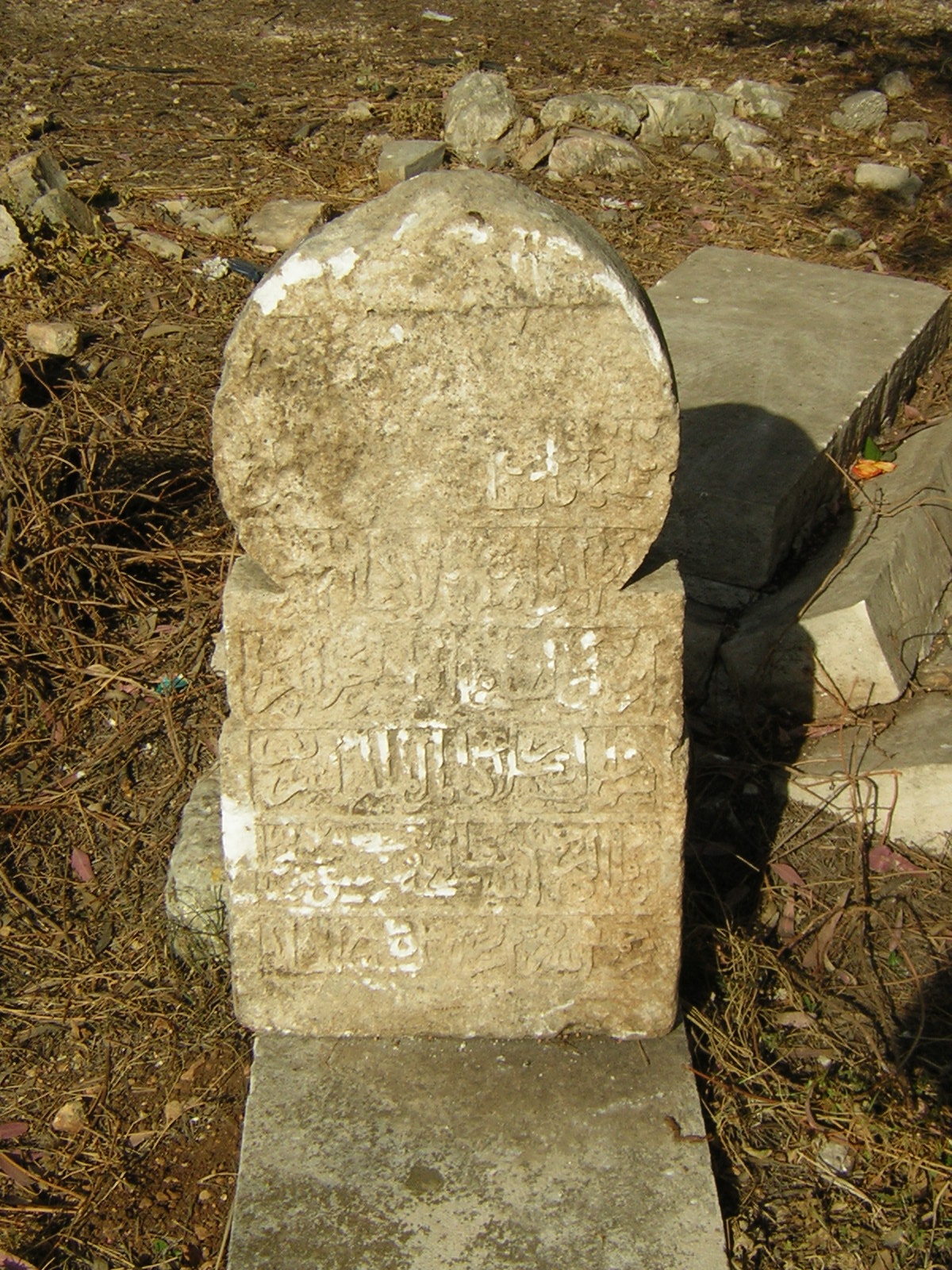
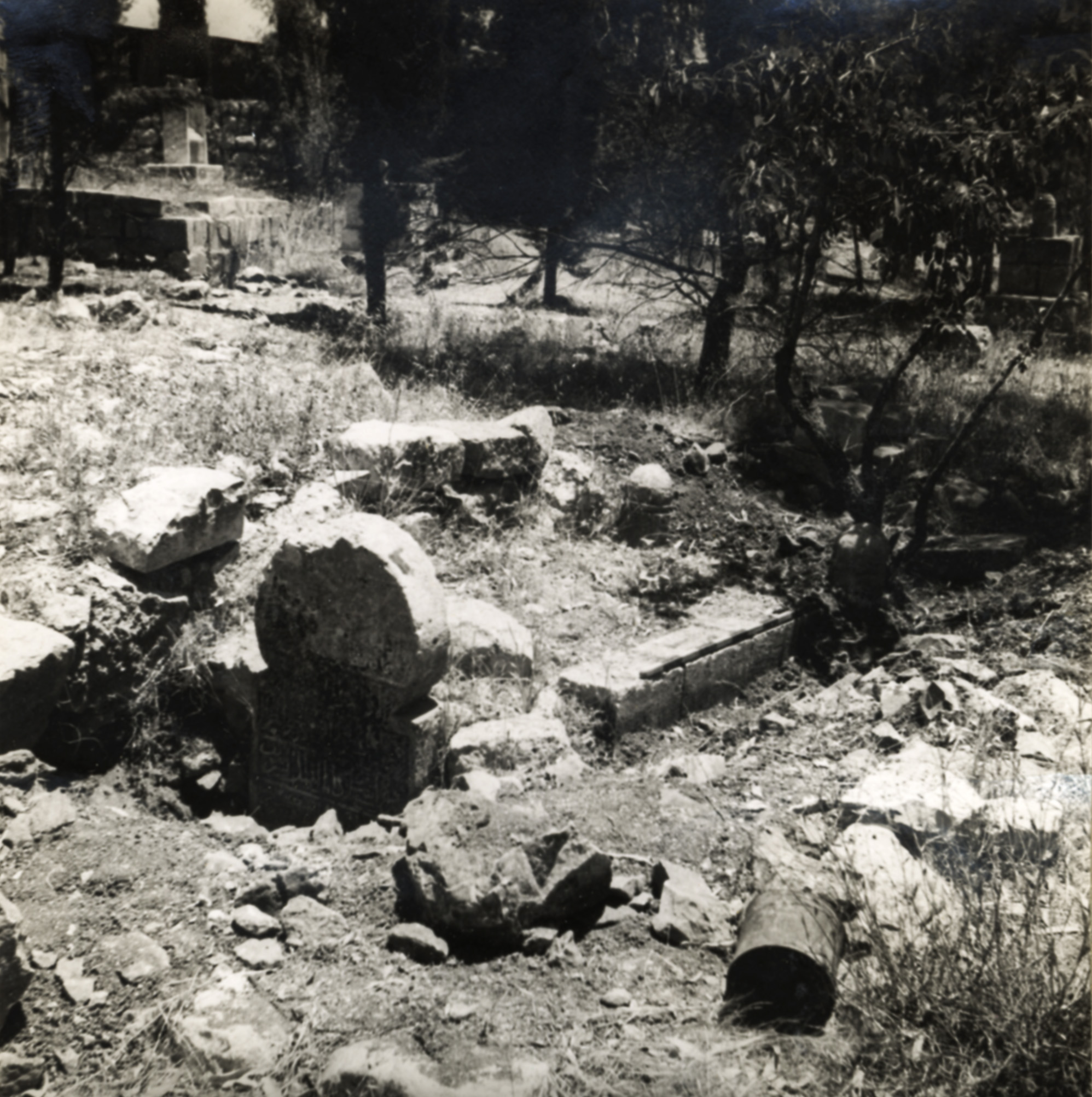
Photographs of Azdamur’s tombstone, as it appeared in the early 21st century, and in its original position, half-buried, as documented by Nubani in 1946. © Tawfiq Daʿadli, 2006 / Courtesy of the Israel Antiquities Authority.
Al-Kubakiyya and the al-Wasiti and Wajadna graves lie close to other graves of politically or religiously important individuals at the eastern end of Mamilla Cemetery. One such tomb, today moved elsewhere in the cemetery, is that of Salah al-Din Azdamur (died 1297/8), the Armour Bearer of the Sultan al-Nasir Muhammad (a role which included supervising the kingdom’s arsenal of weaponry). Salah al-Din Azdamur’s brother Sayf al-Din Salar served as Governor of Karak in present-day Jordan, and is commemorated in inscriptions around Palestine, before he became too powerful, was imprisoned and starved to death, and interred in an elaborate mausoleum in Cairo.

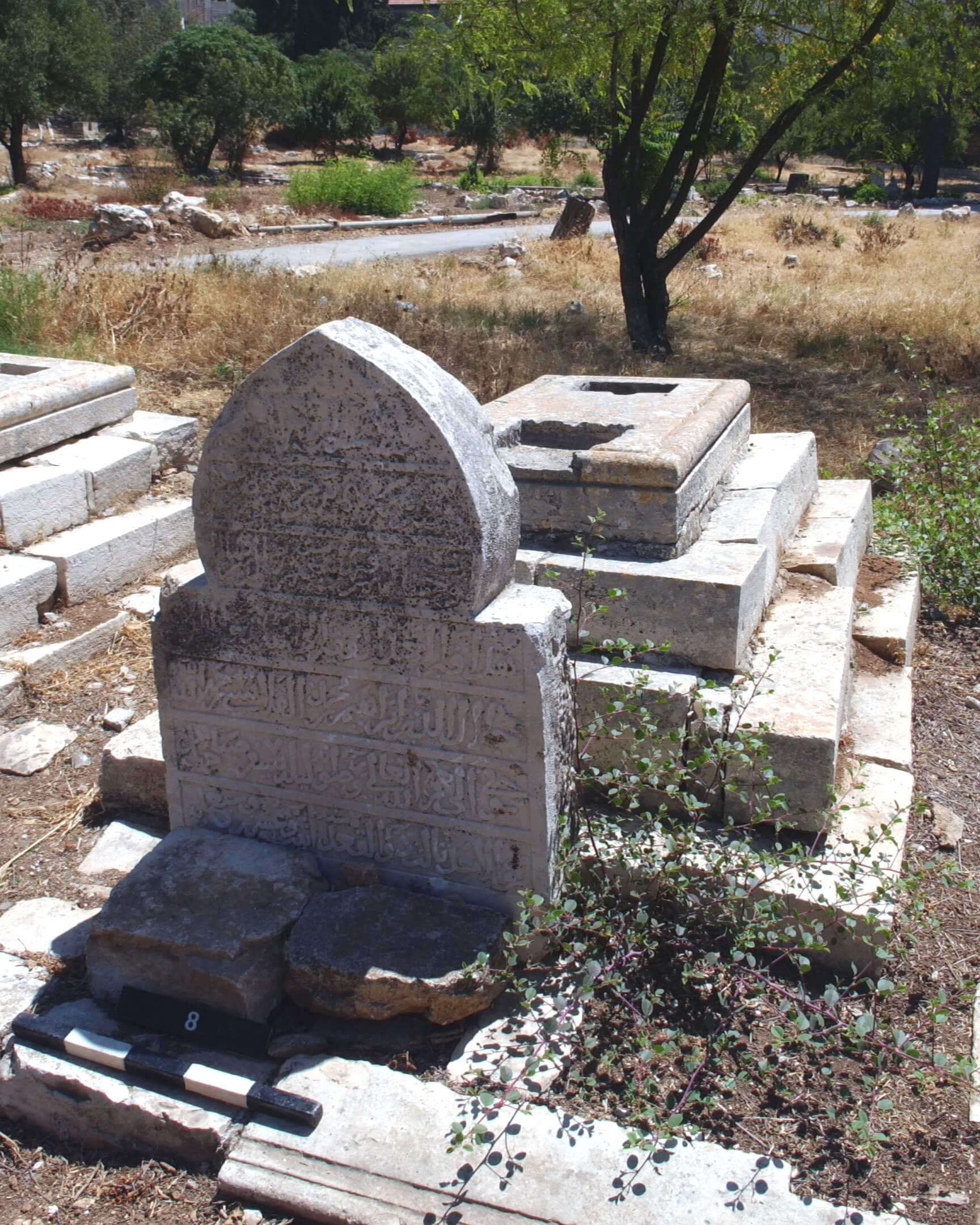
Reconstruction of some of the tombs along the Mamilla axis. © Tawfiq Daʿadli, 2009.
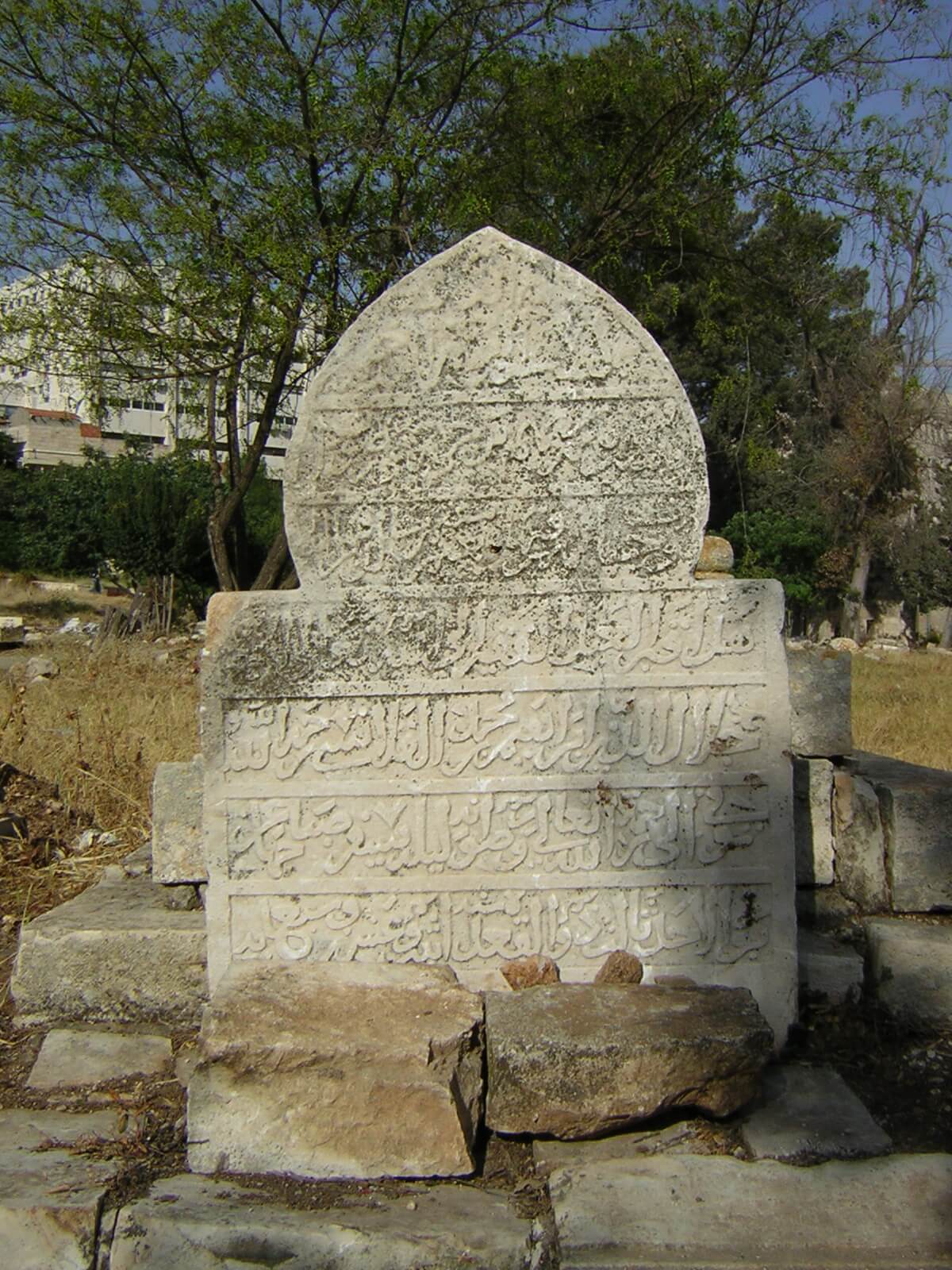
A more spiritual figure also buried along this axis is Jalal al-Din Ibrahim b. Muhammad al-Qalanisi. According to Mujir al-Din, Ibn al-Qalanisi was born in 1255/6. He initially worked as a clerk, before becoming a religious ascetic and scholar. Mujir al-Din records
The amirs of Egypt built for him a zawiya on the “elephant’s pool” in Cairo and used to visit him. He was kind and used to satisfy people’s requests, and was hard of hearing. He emigrated to Jerusalem, went to Damascus where he taught, then he returned to Jerusalem.
Ibn al-Qalanisi died and was buried in Mamilla in 1322.
The tombstone of Ibn al-Qalanisi, its Mamluk inscription still clearly readable. © Tawfiq Daʿadli, 2002, 2006.
The alignment of these and other tombs of renowned figures in a north-south axis at the eastern end of Mamilla, may suggest that this was the cemetery’s heart at the time. It may also demonstrate that this pathway (mentioned in Mujir al-Din’s account) was once considered a particularly auspicious resting place, featuring some of Mamilla’s grandest tombs. Today, many of these tombs are gone.
The women of Mamilla
“The hajja yearning for God”
We know of few women who were buried in Mamilla Cemetery. Yet this does not mean there were not powerful and influential Muslim women in Mamluk Jerusalem, who merited burial in its most prestigious cemetery.
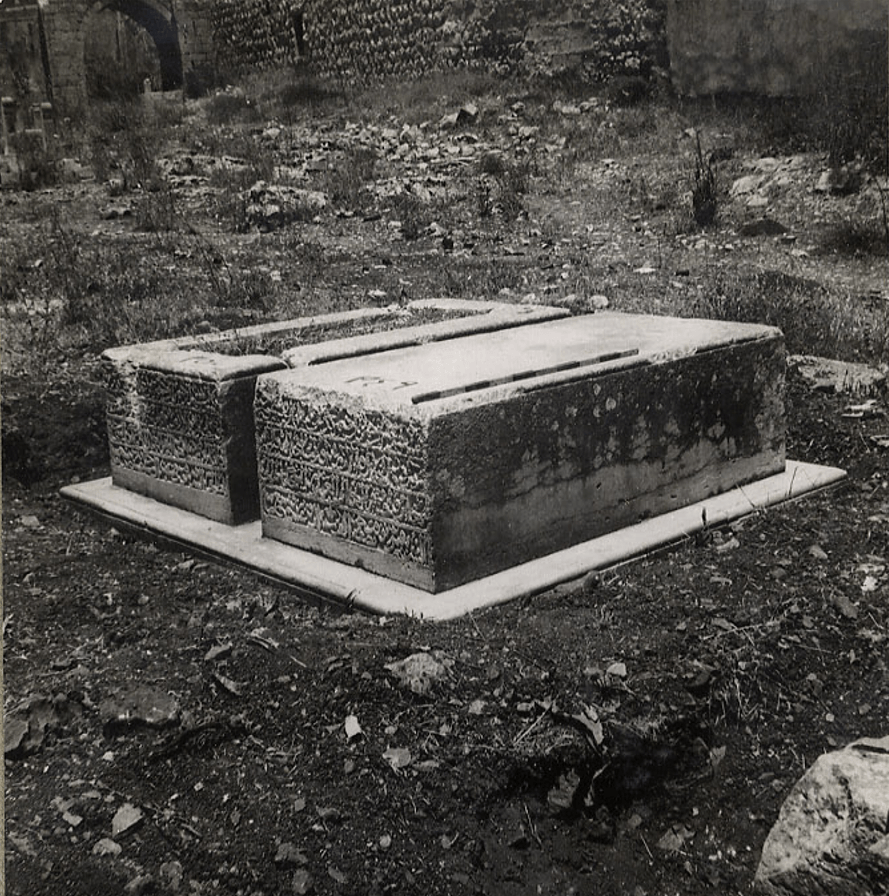
Photo by Hamdi Nubani in 1946. Courtesy of the Israel Antiquities Authority.
Two women who were buried next to each other in the north side of Mamilla Cemetery are, unfortunately, identified only through their male relative. The inscription on one grave reads:
In the name of Allah, the Merciful, the Compassionate. Everyone that is thereon [the Earth] will pass away; there remaineth but the countenance of thy Lord of Might and Glory [Quran 55:26–27] This is the tomb of the hajja yearning for God, be He exalted, the wife of the honoured al-ʿIzzi Aydamur al-Shujaʿi, the superintendent of the two blessed harams. She died in the middle of Rajab in the year 723 [20 July 1323].
On the adjacent grave, following the same Quran verse, the inscription read
This is the tomb of [illegible], mother of the one buried beside her, mother-in-law of the illustrious Lord al-ʿIzzi Aydamur al-Shujaʿi, the Superintendent of the two blessed harams. She died in the month of Shawwal in the year 721 [October/November 1321].
In the absence of further information about these two noblewomen of Jerusalem, we at least know something about their son-in-law and husband. ʿIzz al-Din Aydamur al-Shujaʿi served as the naʾib or Governor of Safad, and then of al-Bira, a fortress on the Euphrates River, today known as Birecik on the Turkish-Syrian border, before being appointed nazir or Superintendent of the Two Noble Harams in Palestine. His name is recorded on an arcade near the Dome of the Rock, completed under Sultan al-Nasir Muhammad (reigned 1293–94, 1299–1309, 1310–41). Al-Nasir’s building projects included Jerusalem’s Cotton Market (Suq al-Qattanin), with its two-story bazaar, baths and hostels for pilgrims and merchants. As a wealthy official, Aydamur could afford family’s tombs on Mamilla’s main path, a privilege not granted to all.
Unfortunately, while Nubani photographed the two women’s graves, mother and daughter, side by side, today almost all trace of the mother’s tombstone has vanished from Mamilla.
While she is buried not in the cemetery, al-Sitt (“the Lady”) Tunshuq al-Muzaffariyya is another woman of Mamilla. Little is known about al-Sitt Tunshuq, beyond that she may have been of Turkish origin and lived in Jerusalem in the 1390s. But she certainly wielded vast wealth and power, because in the Muslim quarter is a vast three-story complex, today an orphanage that still bears her name: Dar (“home of”) al-Sitt. Its ground floor contains a large stable, accessed through two decorated entrances adorned with multicolored stone and carvings.
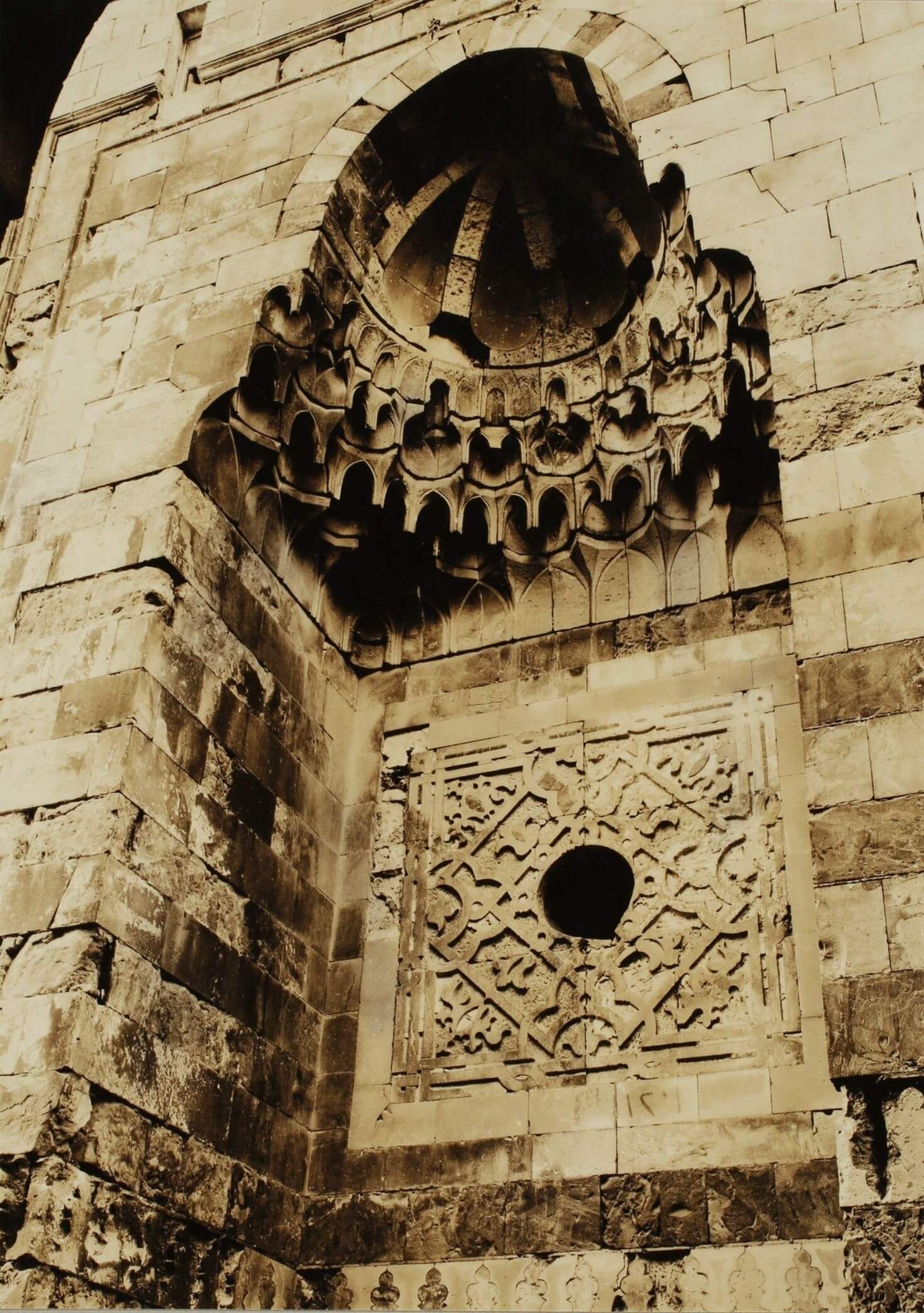
The entranceway to Dar al-Sitt, constructed in the late 14th century. Photo by K.A.C. Creswell, c. 1920. Courtesy of the Victoria and Albert Museum.
Al-Sitt Tunshuq’s connection to Mamilla Cemetery owes to her family’s devotion to a group of Sufis called the Qalandariyya. The teachings of these wandering mystics, known for their eccentric behaviour, was brought to Palestine by the mysterious Shaykh Ibrahim al-Qalandari. According to Mujir al-Din, they made their zawiya in the remains of the “Red Monastery” – possibly the remains of the Byzantine chapel of Saint Mamilla. Al-Sitt Tunshuq built a dome over this structure to commemorate her brother, Bahadur, buried within this zawiya in the late 14th century. Within a century, however, the dome had collapsed, and today no trace of the monastery-turned-Sufi school can be seen.