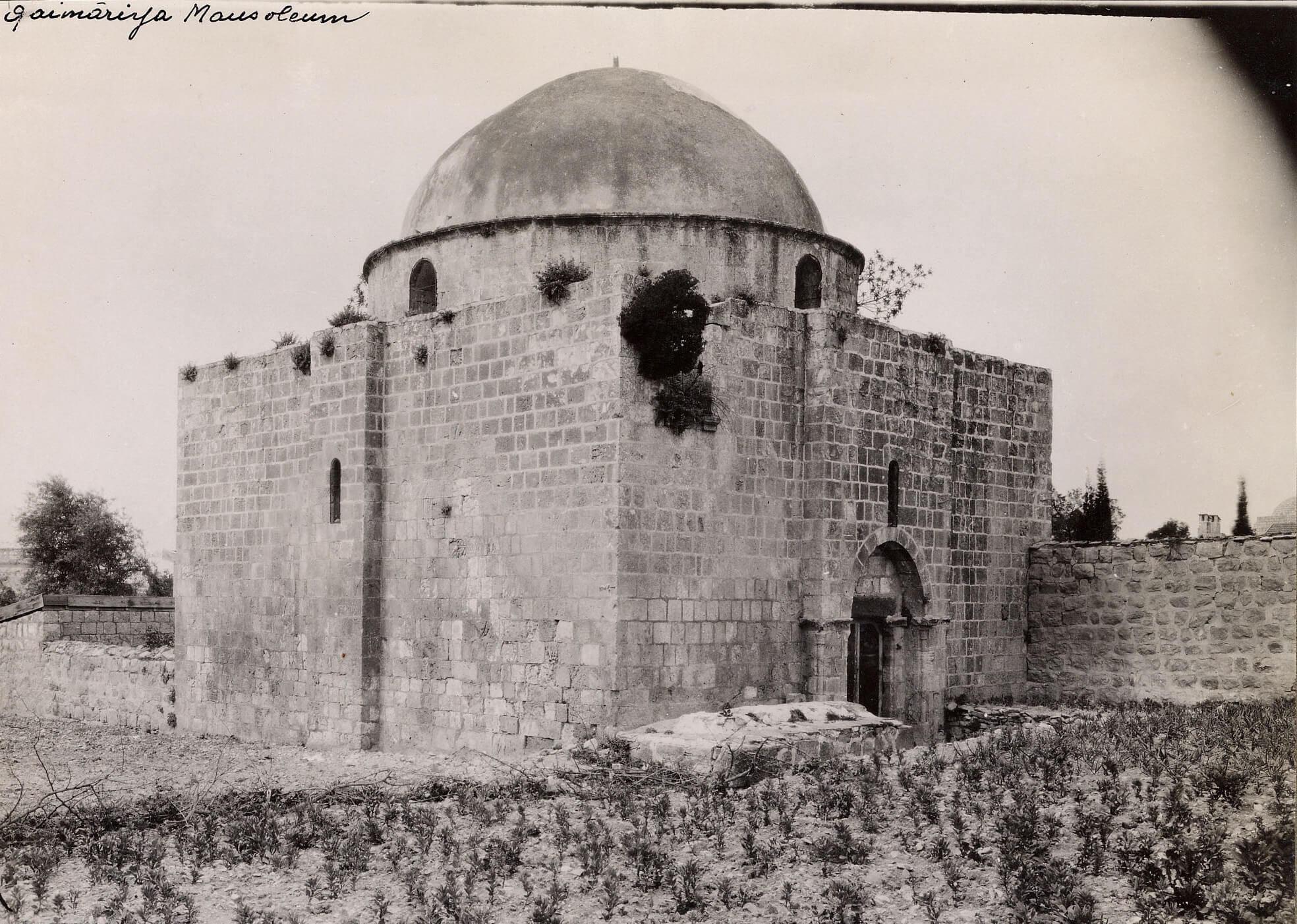
View of the al-Qaymuriyya tomb in the early 20th century. Courtesy of the Israel Antiquities Authority.
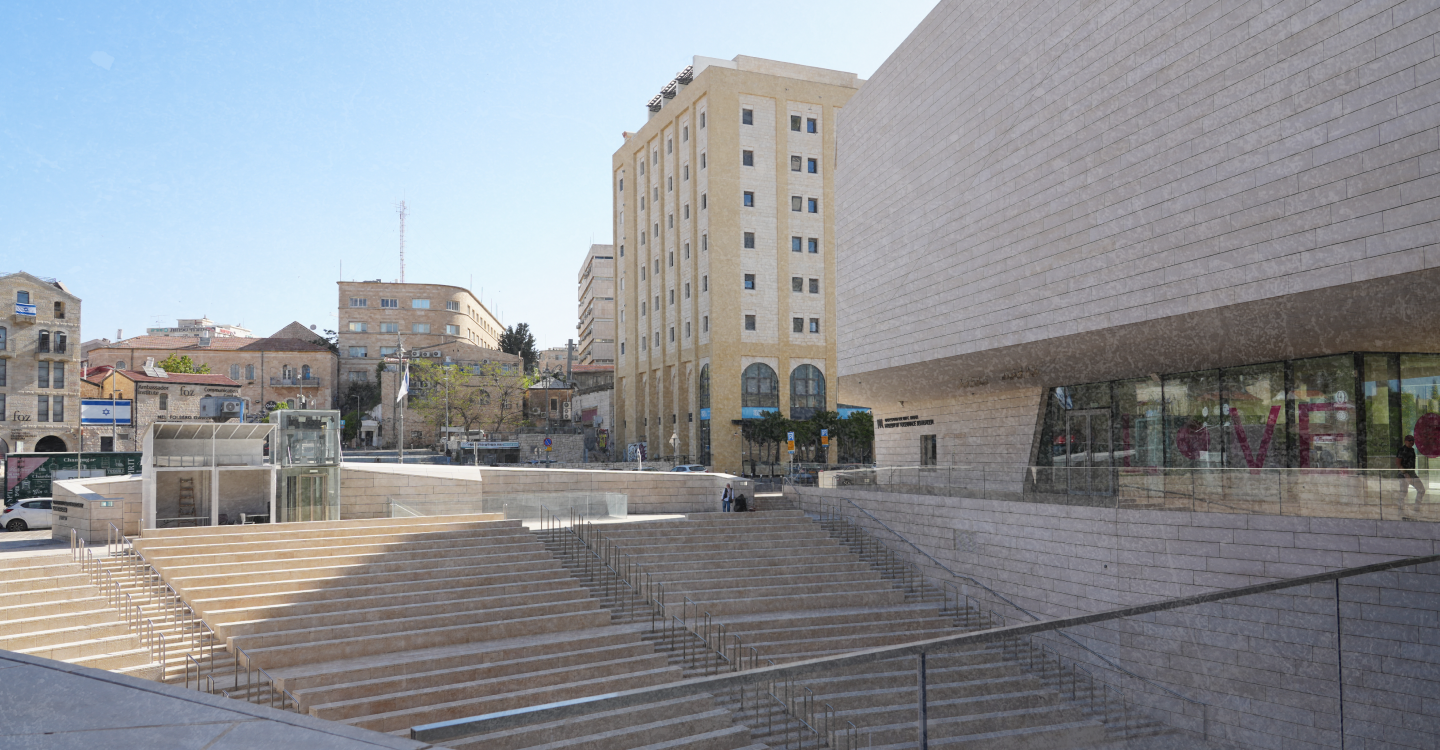
We now leave Mamilla and head northwards – a 10-minute walk through the crowded streets of Jerusalem’s Ultra-Orthodox Jewish neighbourhoods. Across a car park, and in the shadow of a towering office block, is the al-Qaymuriyya tomb. It is remarkable not only for its fascinating history, but also a striking transformation in recent years. While changes in a building’s religious use are common in Palestine/Israel, it is rare to see, today, the spiritual meaning of a building changing before our eyes. The al-Qaymuriyya tomb is one such example.
Across historic Palestine, many sites have passed between one faith and another. An existing mosque or Islamic shrine might mark the place of a Byzantine or Crusader church, which in turn could have been constructed on a spot held sacred by ancient Canaanites, Israelites or others. The existing building could have been repurposed to fit a new faith, or include architectural fragments from an older structure, or have been newly built on a historic site.
Since 1948, this has taken on a political dimension. Many Islamic sites in Israel have been demolished and erased from the landscape, or left abandoned and falling into disrepair (see the mosque of
Zakariyya). Others have been stripped of their Arab Palestinian and Muslim identity, and repurposed for Jewish use. For instance, the 13
th-century shrine of Abu Hurayra, companion of the Prophet Muhammad, in the depopulated Palestinian village of Yibna, has been converted into a Jewish shrine commemorating the 1
st-century Rabbi Gamaliel.
Today subsumed within Jerusalem’s metropolis, al-Qaymuriyya was once among the most significant buildings outside the Old City. The domed
maqam was constructed at the end of the
Ayyubid era, in a period of instability in and around Palestine. Our guide to Jerusalem’s tombs, Mujir al-Din, recounts:
Al-Qaymuriyya is a well-constructed dome outside Jerusalem from the north-west. It is associated with a group of martyred fighters whose tombs are found in it. They are the martyred amir [prince] Husam al-Din Abul Hasan b. Abu l-Fawaris al-Qaymuri [… and] the amir Ḍiyaʾ al-Din Musa b. Abu l-Fawaris, who died on 10 Dhu l-Qaʿda in the year 648 [3 February 1251]; the amir Husam al-Din Khadr al-Qaymuri, who died on 14 Dhu l-Hijja in the year 661 [18 October 1262]; the amir Nasir al-Din b. Abi l-Hasan al-Qaymuri, who died on 10 Safar in the year 665 [9 November 1266 …] there is also the tomb of amir Nasir al-Din Muhammad Jabir Bak, one of the tablakhana [commander of 40 troops, named after military drumming] officers in Damascus, and the Guardian of the Two Sanctuaries of Jerusalem and Hebron, who died on Monday night of 11 Muharram in the year 770 [25 August 1368].
We learn more about these military officers buried in al-Qaymuriyya from 13th-century Coptic Egyptian historian, Jirjis al-Makin b. al-ʿAmid. The Ayyubid ruler of Damascus, Salah al-Din’s grandson al-Nasir Yusuf, led an army including the brothers Husam and Ḍiyaʾ al-Din al-Qaymuri to attack his Mamluk rivals in 1251. The armies met on the Mediterranean coast of the Sinai Peninsula. Initially, al-Nasir Yusuf had the upper hand; however, he was betrayed by several of his commanders. With their support, the Mamluk commander al-Muʿizz routed the Ayyubids, with al-Nasir fleeing back to Damascus. Prematurely believing they had won the battle, the two Qaymuri amirs were slain as they scavenged for spoils of war.
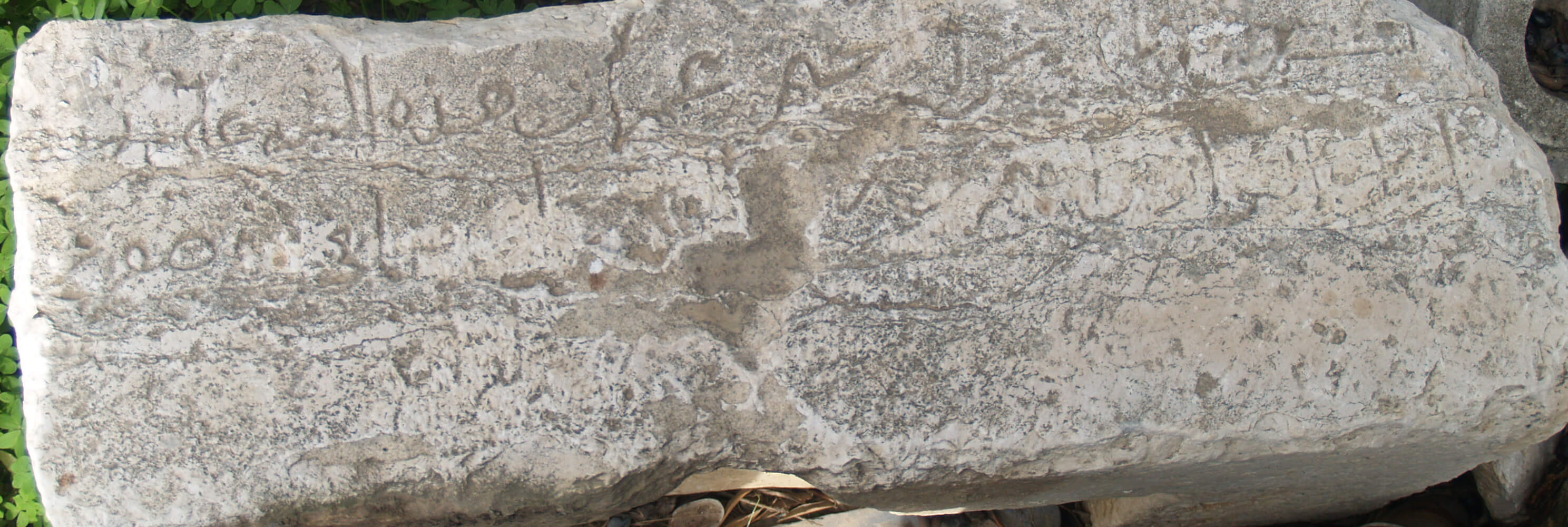
Part of the inscription discovered at al-Qaymuriyya in 2012. © Tawfiq Daʿadli, 2012.
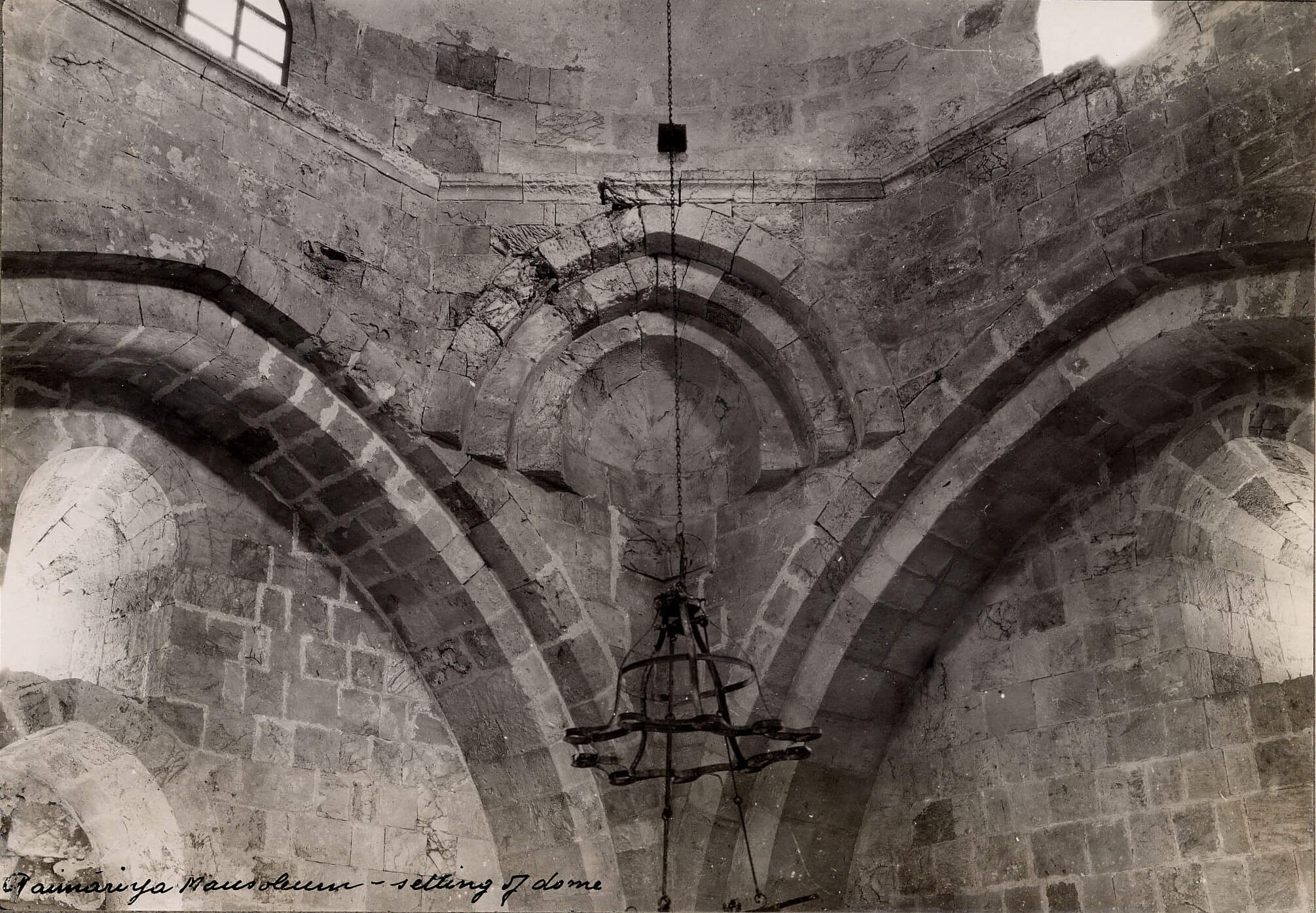
Back in Jerusalem, the maqam for the Qaymuri brothers was constructed in three months, as we know from an inscription uncovered by an excavation at al-Qaymuriyya in 2012. It features a row of sarcophagi and a mihrab prayer niche to the south. Like the later al-Kubakiyya tomb, al-Qaymuriyya also shows a unique Jerusalemite building style, in which architects handled tricky transitions from a square, to an octagon, and finally to a round dome, differently from their contemporaries in Cairo and Damascus.
An innovative style of squinch (architectural feature used to support a dome) inside al-Qaymuriyya. Courtesy of the Israel Antiquities Authority.
In later eras, Muslim scholars such as Mujir al-Din visited al-Qaymuriyya. Nevertheless, as centuries passed, local people and the religious authorities forgot the long-dead Ayyubid amirs, and began associating the site with an older and more legendary Muslim warrior: Nabi (Arabic: Prophet) ʿUkasha. Despite the epithet nabi, ʿUkasha was not a prophet, but rather a companion of Prophet Muhammad, who engaged in early Muslim military conquests.
Palestinian ethnographer and expert on maqams, Tawfiq Canaan, reported that “Although it is known that ʿOkȃšeh […] did not die in Jerusalem, his shrine here has a tomb. It is said that he appeared to a person praying at this spot and ordered him to erect a maqȃm for him.” The shrine was restored by the Ottoman authorities in 1863/4, possibly around the same time as a small mosque dedicated to ʿUkasha was constructed nearby.
During the British occupation of Palestine, al-Qaymuriyya/Nabi ʿUkasha was in the middle of a densely populated Jewish neighbourhood, as today. At times of unrest, this put the building at risk: in 1929, when parts of the country saw clashes between Arabs and Jews, the mosque was ransacked, and some of the tombs badly damaged. These attacks were echoed in 2011, when the shrine was damaged by an arson attack and inscribed with Islamophobic graffiti.
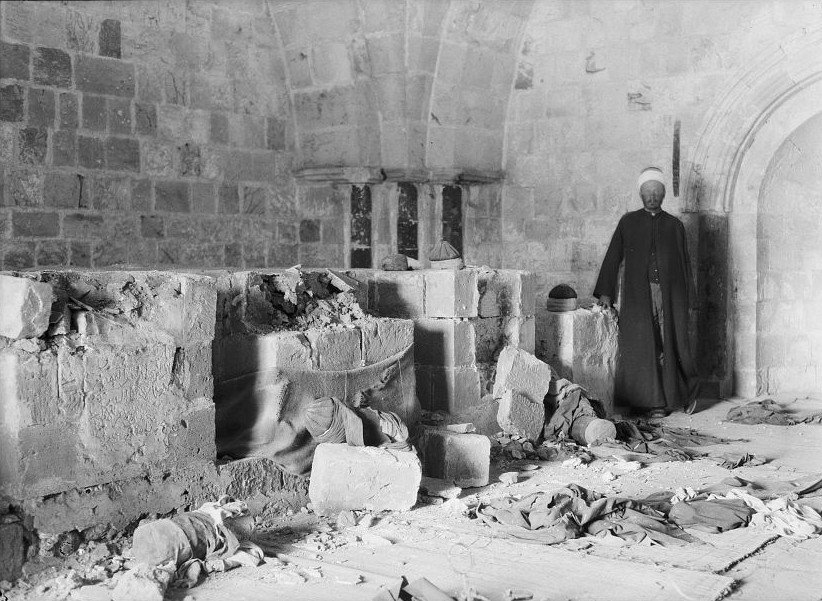
Damage done to the tombs in al-Qaymuriyya in 1929, by American Colony Photo Department. Courtesy of the Library of Congress.
For decades after 1948, al-Qaymuriyya stood almost abandoned, used by the Jerusalem Municipality for storage. However, in recent years, it has undergone an unexpected transformation. Since 2023, it has been revered by Ultra-Orthodox Jews as the tomb of the Biblical Prophet Benjamin, despite no previous tradition linking Benjamin to the site, and a 13th- or 14th-century tomb of Benjamin, or Nabi Yamin, in the depopulated Palestinian village of Kafr Saba (today the Israeli town of Kfar Saba).
We conclude with the reflections of Shai Secunda, Jacob Neusner Professor of Judaism at Bard College, who visited al-Qaymuriyya with PHJ lead researcher Tawfiq Daʿadli:
The first thing we noticed was the blue paint splashed over the building’s arched entrance. When we went in, we saw Hebrew embroidery covering the tombstones and naming the deceased as the biblical Benjamin and his sons. (The Arabic inscription at the site, which Tawfiq had helped excavate, had been removed long ago and is presently held in Jerusalem’s Rockefeller Museum.) The scene disturbed me, though in Tawfiq’s view, it was better to have a site religiously repurposed than for it to remain abandoned, at risk of demolition or collapse.
Such is the dilemma facing many Palestinian heritage sites in Israel today.